Oct 14, 2026Ultrasonic Cleaning Technology
Filtration vs Oil Separation in Ultrasonic Cleaning Systems: What Is the Difference?
Learn how filtration and oil separation work differently in industrial ultrasonic cleaning systems, and when your process may need filters, oil skimmers, or both.
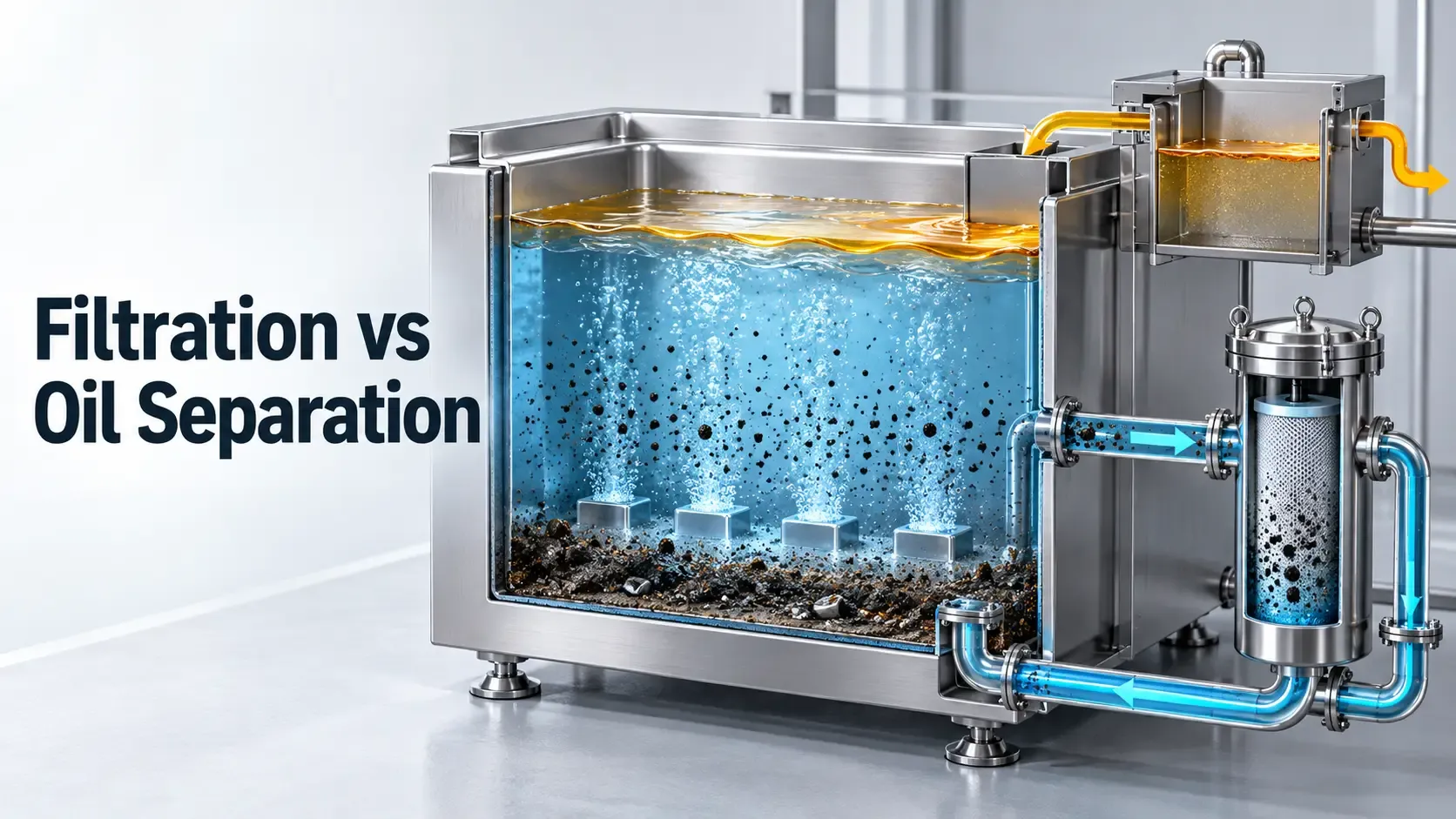
Filtration and oil separation are often mentioned together in industrial ultrasonic cleaning systems, but they do not solve the same problem.
A filtration system mainly removes solid contamination such as metal chips, swarf, carbon particles, polishing compound, grinding dust, and sludge.
An oil separation or oil skimming system mainly removes free oil floating on the surface of the cleaning bath.
Many cleaning problems happen because buyers expect one system to do the job of the other. A particulate filter cannot fully remove floating oil. An oil skimmer cannot remove fine metal particles from the bath. And neither system can fully restore exhausted cleaning chemistry.
This guide explains the difference between ultrasonic cleaner filtration and oil separation, when each system is needed, and when industrial cleaning applications may require both.
Quick Answer
Use filtration when your process produces solid particles, such as:
- metal chips
- swarf
- grinding dust
- carbon particles
- polishing compound
- sludge
- insoluble debris
- suspended solids
Use oil separation or oil skimming when your process produces free-floating oils, such as:
- tramp oil
- cutting oil
- grease released from parts
- rust preventive oil
- surface oil that recoats parts during removal
Use both filtration and oil separation when parts contain both oil and solid particles. This is common in CNC machining, engine rebuilding, mold maintenance, heavy repair, and industrial maintenance cleaning.
Neither system eliminates the need for correct detergent selection, bath replacement, rinsing, or drying.
Why the Difference Matters
A common mistake is assuming that adding a particle filter will keep the bath completely clean.
If your bath contains metal chips, filtration may help. But if clean parts come out feeling greasy because they pass through a floating surface oil layer during removal, a particulate filter will not solve the problem.
An oil skimmer removes floating oil, but it does not remove metal chips, carbon dust, abrasive particles, or sludge from the tank.
The real question is not simply:
“Do I need a filter?”
The better question is:
“What type of contamination is entering the bath, and what equipment is needed to remove it?”
What Filtration Does in an Ultrasonic Cleaning System
Filtration is used to remove solid contamination from the cleaning bath.
In ultrasonic cleaning, cavitation loosens dirt, chips, carbon, dust, and other particles from the part surface. Once those particles enter the bath, they may remain suspended in the liquid, settle at the bottom, or return to the parts.
A filtration system circulates cleaning liquid through a filter element or filter housing to capture particles before they accumulate.
Filtration can help:
- reduce suspended particles in the bath
- remove metal fines, chips, swarf, and loose debris
- slow down sludge buildup
- improve bath stability
- reduce particles returning to cleaned parts
- support longer useful bath life in particle-heavy processes
Filtration is especially useful for machined parts, stamped parts, engine components, molds, castings, and parts with loose debris.
However, filtration does not mean the bath is always clean. A filter is only effective for the type and size of contamination it can capture. If the bath contains dissolved oil, emulsified contamination, exhausted detergent, or chemical imbalance, a standard particle filter may not solve the issue.
What Oil Separation or Oil Skimming Does
Oil separation removes free oil from the cleaning bath, especially oil floating on the surface.
When ultrasonic cleaning removes cutting oil, grease, rust preventive oil, lubricants, or oily residues, some oil may separate and rise to the top of the bath. If this oil remains on the surface, cleaned parts may pass through that oil layer when they are lifted out.
This is one reason parts can look clean in the bath but feel oily after removal.
Oil separation or oil skimming can help remove that surface oil before it recoats the parts.
Oil removal methods may include:
- surface overflow
- oil skimmer
- weir tank
- oil separation chamber
- coalescing separation
- circulation through a side tank
- manual surface oil removal in simple processes
Oil separation can help:
- reduce floating oil on the bath surface
- prevent oil redeposition during lift-out
- keep the wash bath more stable
- reduce manual oil removal
- support longer production runs
- improve consistency in oily parts cleaning
Oil separation is especially useful for engine parts, automotive components, machined parts with cutting oil, maintenance parts, and heavily greased industrial components.
Free Oil vs Emulsified Oil
One important distinction is free oil versus emulsified oil.
Free oil separates from the cleaning liquid and floats on the surface. This type of oil can often be removed by surface overflow, skimming, or oil separation.
Emulsified oil is mixed into the cleaning liquid by chemistry and agitation. It may not rise quickly to the surface. A simple oil skimmer may not remove it effectively.
This is why detergent selection matters.
Some cleaning solutions are designed to emulsify oil and hold it in the bath. This can improve oil removal from the part surface, but the bath may become exhausted once it holds too much oil.
Other solutions are designed to separate oil more easily, allowing oil to rise to the surface and be removed. This may support longer bath life in some processes, but the cleaning process must be designed to prevent floating oil from recoating parts.
The correct choice depends on the contamination, cleaning standard, bath maintenance method, and production workflow.
What Neither System Can Fully Solve
Filtration and oil separation are useful, but they are not magic solutions.
They cannot fully solve every bath or cleaning problem.
Filtration cannot fully remove floating oil if the system is not designed for oil separation.
Oil skimming cannot remove fine particles, carbon dust, grinding powder, or heavy sludge from the bath.
Neither filtration nor oil separation can fully restore cleaning chemistry after the bath is exhausted.
They also cannot fix:
- wrong detergent selection
- incorrect detergent concentration
- poor rinsing
- insufficient cleaning time
- low bath temperature for the selected chemistry
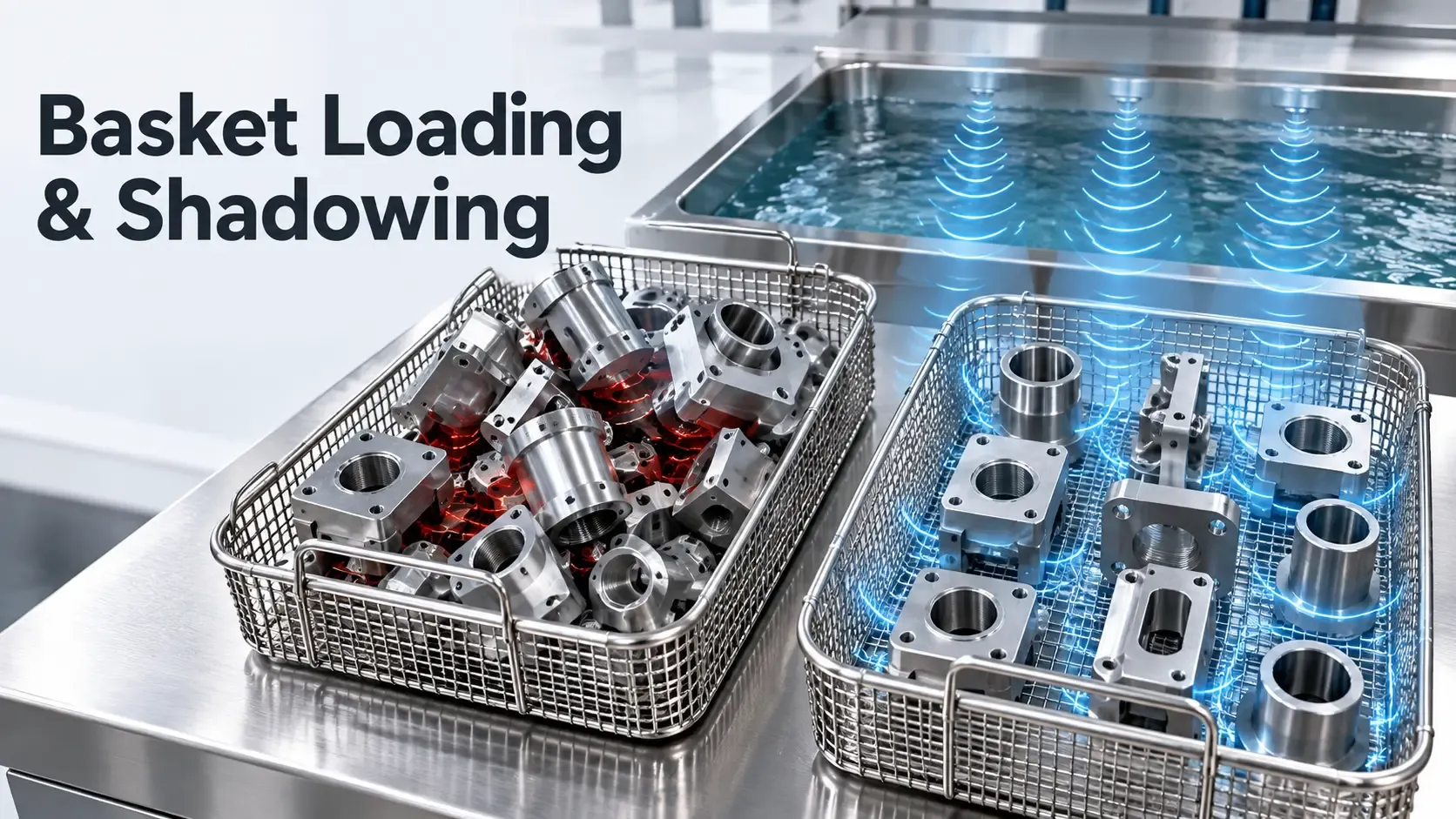
- overloaded baskets
- ultrasonic shadowing
- air trapped in blind holes
- incompatible material and chemistry
- lack of drying or rust protection
For example, if white residue appears after drying, the issue may be detergent concentration, minerals, poor rinsing, or bath condition. Adding filtration alone may not fix it.
If parts still feel greasy after cleaning, the issue may involve floating oil, emulsified oil, bath saturation, or insufficient rinsing. A particle filter alone may not be enough.
Common Misdiagnosis in Industrial Cleaning
Many ultrasonic cleaning problems are misdiagnosed because filtration and oil separation are confused.
If parts still come out oily, the first reaction may be to add a better filter. But if the oil is floating on the bath surface, oil separation may be the missing function.
If cleaned parts have particles inside blind holes, the first reaction may be to add an oil skimmer. But if the problem is metal chips or suspended debris, filtration or pre-cleaning may be more relevant.
If the filter clogs too quickly, the issue may not be the filter itself. The soil load may be too heavy for the current process. A pre-wash stage, larger filtration capacity, or more frequent bath maintenance may be needed.
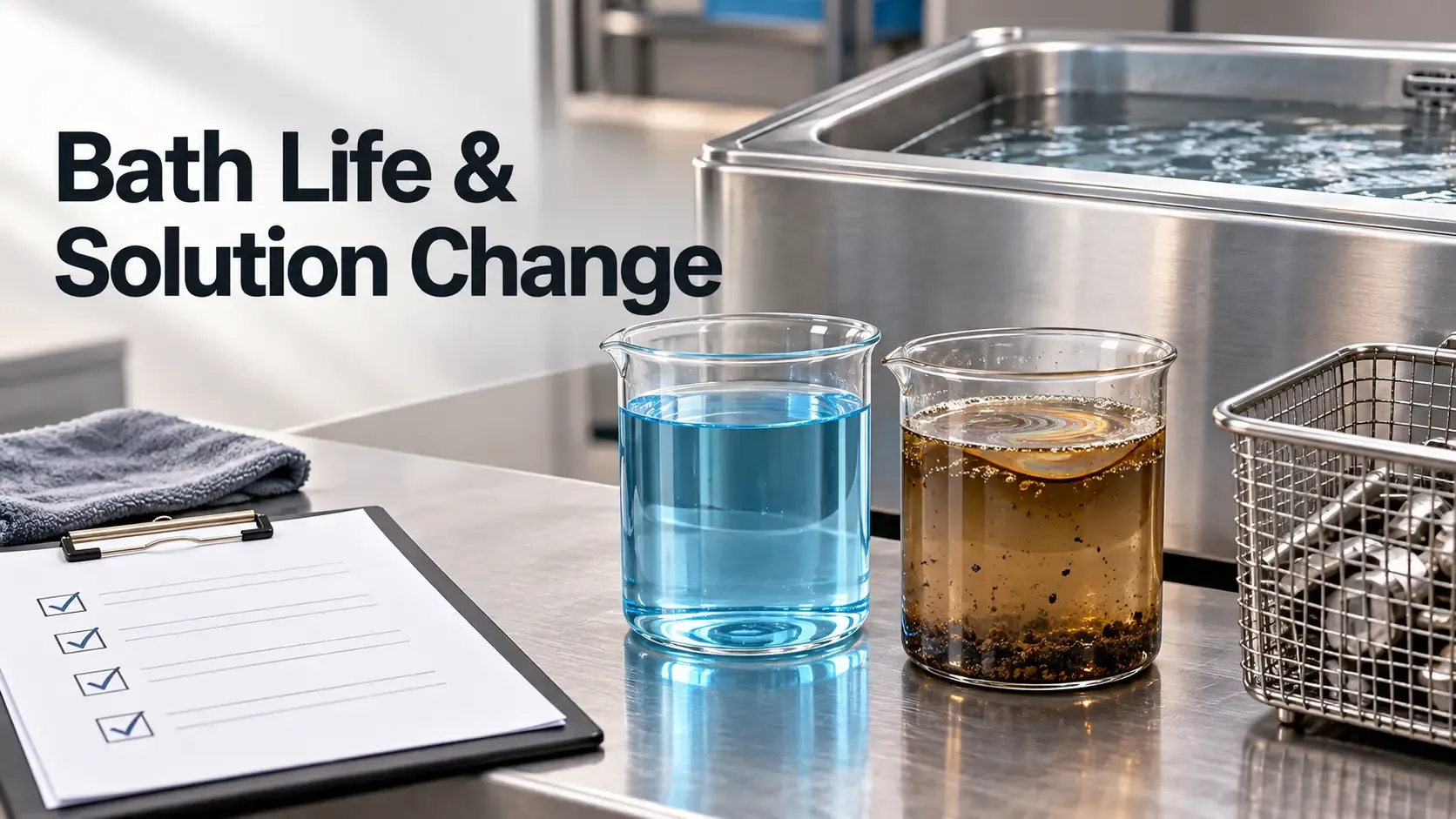
If the bath still smells dirty or loses cleaning performance quickly, the issue may be bath saturation. Filtration and skimming can extend bath stability, but they cannot keep one bath alive forever.
If parts have residue after cleaning, the issue may be rinsing, detergent concentration, water quality, or drying, not only filtration.
Good process diagnosis starts by identifying the actual contamination:
- Is it solid?
- Is it floating oil?
- Is it emulsified oil?
- Is it dissolved residue?
- Is it chemical film?
- Is it rust or oxidation?
- Is it redeposition from a dirty bath?
Only then can the correct configuration be selected.
Configuration Decision Guide
Cleaning Situation | Main Problem | Useful Configuration |
|---|---|---|
Machined parts with chips, dust, and limited oil | Solid particles | Filtration |
Stamped parts coated with light rust preventive oil | Floating surface oil | Surface overflow or oil skimmer |
CNC parts with cutting oil and metal swarf | Oil and particles together | Filtration + oil separation |
Engine parts with sludge, carbon, and grease | Heavy sludge and oil | Pre-cleaning + filtration + oil separation |
Parts look clean underwater but feel greasy after removal | Surface oil redeposition | Surface overflow, oil skimmer, or oil separation chamber |
White spots or residue remain after drying | Detergent, minerals, or rinse issue | Review concentration, rinsing, water quality, and drying |
Fine particles remain in holes | Suspended solids or loading issue | Filtration, better basket loading, or flushing |
Cleaning result varies by batch | Process instability | Review bath life, loading, filtration, oil removal, and maintenance schedule |
This table should not replace project evaluation, but it helps clarify which problem each system is meant to solve.
When Filtration Alone May Be Enough
Filtration alone may be enough when the main contamination is solid particles rather than oil.
Examples include:
- metal chips from machined parts
- dust and loose debris
- grinding particles
- carbon particles
- polishing compound
- loose scale or particulate residue
In these cases, the process may not need a dedicated oil skimmer if there is little free oil on the bath surface.
However, the filter must match the process. A small filter may not handle heavy sludge. A filter that is too fine may clog quickly. A filter that is too coarse may allow fine particles to continue circulating.
Filtration should be selected based on contamination type, expected load, circulation flow, filter maintenance access, and production volume.
When Oil Separation Alone May Be Enough
Oil separation alone may be useful when free oil is the main problem and solid contamination is limited.
For example, some parts may carry a light layer of oil or rust preventive that separates and floats during cleaning. If there are not many chips or particles, oil skimming may help keep the surface cleaner and reduce redeposition.
But oil separation alone is not enough if the bath also contains metal chips, abrasive powder, carbon sludge, or suspended solids.
In many industrial applications, oil and particles appear together, so oil separation alone may only solve part of the problem.
When You Need Both Filtration and Oil Separation
Many industrial ultrasonic cleaning applications need both.
This is common when cleaning:
- CNC machined parts with cutting oil and chips
- engine parts with oil, carbon, and sludge
- maintenance parts with grease and loose debris
- molds with oil, dust, and deposits
- stamped parts with lubricant and metal fines
- hydraulic parts with oil and particles
- heavy-duty repair components
In these cases, filtration helps remove solids, while oil separation helps remove free oil from the bath surface.
A combined system can improve bath stability, reduce redeposition, and support more repeatable cleaning results.
However, even a combined system still needs correct detergent, proper concentration, bath replacement, rinsing, and maintenance.
Single Tank vs Multi-Stage System
A single ultrasonic tank with filtration and oil separation can be useful for many applications.
But when cleaning standards are higher, or when parts move into coating, assembly, inspection, or packaging, a single wash tank may not be enough.
A more controlled process may require:
Wash
↓
Rinse
↓
Optional second rinse
↓
Dry
For heavy contamination, the system may also include pre-wash, filtration, oil separation, overflow, lifting, agitation, or hot air drying.
If one tank is expected to wash, hold oil, capture particles, rinse away detergent, and deliver final cleanliness, the process may become unstable.
Product and System Mapping
For simple industrial cleaning with particles but limited oil, an ultrasonic cleaner with filtration may be suitable.
For processes that require washing and rinsing in separate tanks, a dual-tank configuration may be more suitable.
For higher cleanliness requirements, larger production volume, or more stable process control, a multi-stage ultrasonic cleaning system may be needed.
What Information to Send Sonixmax for Configuration Evaluation
If you are not sure whether your application needs filtration, oil separation, or both, send Sonixmax your cleaning requirements.
Useful information includes:
- part material
- part dimensions and weight
- contamination type
- whether the contamination includes oil, chips, carbon, sludge, or polishing compound
- daily or weekly cleaning volume
- current cleaning process
- bath condition after cleaning
- photos of dirty parts
- photos of cleaned parts
- photos of the bath surface after operation
- whether parts feel oily, show particles, or have residue after cleaning
- required cleaning result
- whether rinsing or drying is required after washing
With this information, Sonixmax can help evaluate whether your process needs filtration, oil separation, rinsing, drying, or a different ultrasonic cleaning system configuration.
Need Help Choosing Filtration or Oil Separation?
If your ultrasonic cleaning bath contains chips, sludge, floating oil, or inconsistent contamination, choosing the right support system matters.
Filtration removes solids. Oil separation removes free oil. Many industrial cleaning processes need both.
Send Sonixmax your part details, contamination type, bath condition, cleaning volume, and photos.
Sonixmax can help evaluate whether your application needs a filtration system, oil separation, rinsing, drying, or a more complete ultrasonic cleaning process.