Oct 24, 2026Ultrasonic Cleaning Technology
Rechargeable vs Plug-In Household Ultrasonic Cleaners: Which Should You Choose?
Compare rechargeable and plug-in household ultrasonic cleaners by daily use, charging requirements, item fit and verified cleaning performance before choosing a product.
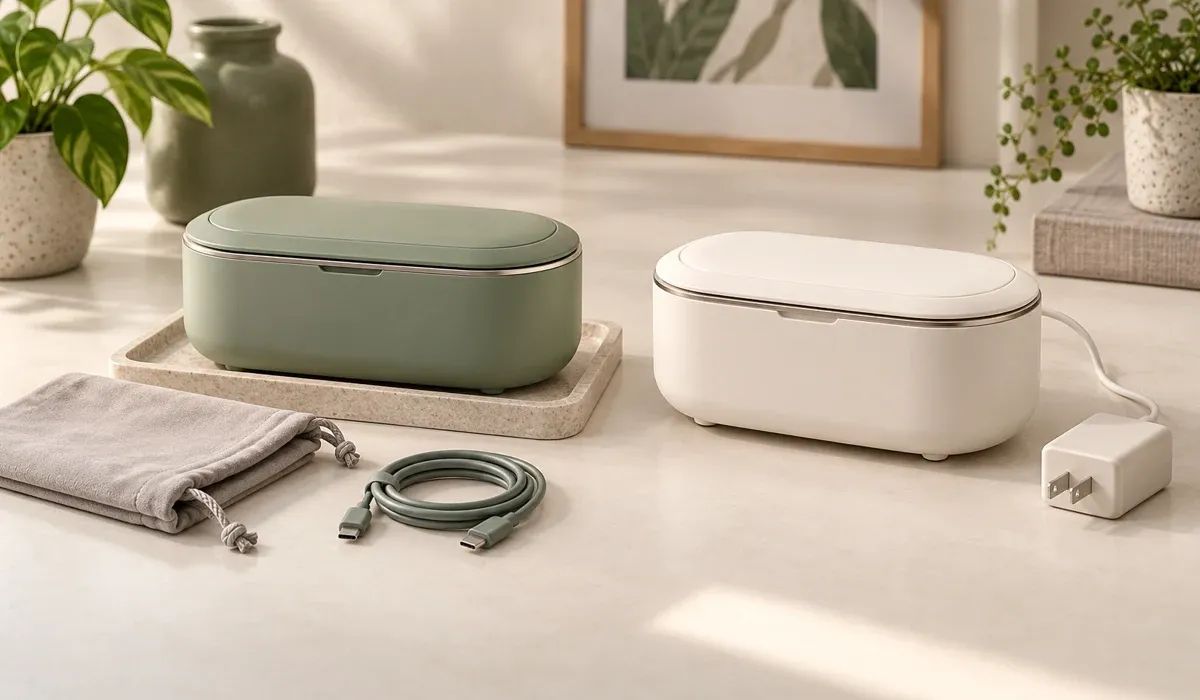
A cordless ultrasonic cleaner can look convenient on a bathroom counter or dressing table. A plug-in model may seem simpler for a product that stays in one place. But neither description tells you whether the cleaner fits the intended items or delivers the required cleaning result.
For household brands, retailers and private-label buyers, the decision involves the whole routine: where customers use the product, how they power it, what they put inside, and what they need to understand before starting a cycle.
This guide compares rechargeable and plug-in household ultrasonic cleaners and explains what to verify before approving a product for your brand.
Quick Answer: Choose for the Routine and Verify the Result
A rechargeable cleaner may suit a product concept that needs operation away from a continuous power connection. A plug-in cleaner may suit a fixed location where connecting power for each use is practical.
Neither format automatically provides better cleaning. Compare the actual models using representative items, permitted cleaning liquids and documented operating conditions.
Also separate three different descriptions: a charging connector, an internal battery and cordless operation. A Type-C port alone does not establish that a cleaner contains a battery or can run without its cable.
Rechargeable, Cordless and USB-Powered Are Different Descriptions
A rechargeable ultrasonic cleaner stores energy in a battery. Where the model supports cordless cleaning, it can run an approved cycle without remaining connected to external power.
A plug-in cleaner relies on an external power connection during operation. That connection may involve a power adapter, a detachable cable or another arrangement specified for the model.
USB or Type-C describes a connection rather than a complete operating mode. Buyers still need to confirm whether the connection powers the cleaner directly, charges a battery, or supports both functions under defined conditions.
A connector description leaves the operating mode unresolved:
This is a checklist of possible functions, not a wiring diagram for a specific product.
Likewise, a detachable cord does not prove cordless operation. The cord may simply detach for storage or replacement.
Before comparing quotations or product samples, ask the supplier to describe the operating mode explicitly. “Portable,” “USB” and “rechargeable” should not be used as interchangeable specifications.
Compare the Everyday Experience
Start with the intended location and customer routine rather than choosing a power format from the product photograph.
Use requirement | Rechargeable model: what to assess | Plug-in model: what to assess |
|---|---|---|
Use away from a convenient power connection | Whether cordless cleaning is supported and how charging fits the routine | Whether the required external connection is practical at the intended location |
A product that stays on one counter | Whether cordless operation adds useful value | Adapter placement, cable routing and connection requirements |
Several cleaning sessions between charges | Verified operating conditions and available cycles under those conditions | Permitted cycle frequency and any required pauses |
Compact storage or travel positioning | Complete product size, charger, accessories and charging requirements | Complete product size, cable, adapter and destination power requirements |
Simple customer instructions | Charging status, starting conditions and low-battery messages | Correct power connection and clear start/stop instructions |
Jewelry, eyewear or other intended items | Actual usable tank dimensions and item compatibility | The same item-fit and compatibility checks |
A smaller rechargeable body is not automatically more useful if the intended item cannot fit. Similarly, a plug-in product may still be compact and easy to store.
Evaluate the whole product as customers will receive it, including the required accessories. The cleaner body alone does not represent the complete storage or carrying experience.
Our household ultrasonic cleaner feature guide explains how these practical choices fit into a broader consumer-product concept.
Does a Plug-In Ultrasonic Cleaner Clean Better?
The power source alone does not establish cleaning performance. It also does not establish that two models perform equally.
Compare the result on the same suitable items and representative contamination. Record the liquid, loading arrangement, filling level and cycle settings. If different conditions are necessary for each model, make those differences clear when interpreting the result.
Tank fit matters here too. A model that holds the intended item comfortably may provide a more appropriate starting point than a product selected only for battery capacity, advertised power or compact appearance.
For a rechargeable sample, ask whether the claimed cleaning behavior has been evaluated across its intended operating range. If there are restrictions at a low charge level, those restrictions should be documented rather than discovered by customers.
For either format, confirm the permitted operating routine. A continuous power connection does not, by itself, establish that a household cleaner can run repeated cycles without pauses.
What Should You Ask About Battery Runtime and Charging?
A runtime figure is useful only when its meaning and test conditions are clear.
Ask whether the stated duration refers to active ultrasonic cleaning, a combination of functions, or total powered-on time. Confirm the starting charge condition, selected cycle, enabled features and any pauses used during evaluation.
Do not simply divide an advertised runtime by a timer setting and publish the result as a verified number of cleaning cycles per charge. Ask for evidence supporting the exact claim you intend to make.
A battery-capacity number also does not replace a test of the complete product. Buyers need to understand the actual cleaning routine the final configuration supports.
Charging questions should include:
- The specified input and required adapter or power supply.
- Whether the necessary cable and adapter are included.
- The documented charging time and its test conditions.
- How charging and low-battery status are shown.
- Whether cleaning while charging is permitted.
- What service or battery-replacement arrangements are available, if any.
Keep use while charging separate from cordless operation: approval for one does not establish approval for the other. Follow the instructions for the exact product, particularly when filling, emptying or handling the cleaner around water.
Cordless Operation Does Not Mean the Housing Can Be Immersed
Removing a cable from the cleaning routine does not establish an immersion rating for the appliance.
The tank is designed to contain liquid, but the housing, controls and charging connection have their own use restrictions. Any water-resistance claim should match the final product documentation and the stated conditions.
For a private-label project, make filling, emptying, external cleaning and charging instructions easy to distinguish. A broad word such as “waterproof” should not replace a clear explanation of permitted handling.
These requirements belong in the product evaluation for both rechargeable and plug-in designs. They should not be treated as a reason to assume either format is universally safer.
What Brands Should Confirm Before Approving a Sample
A useful sample review checks the final configuration and the intended customer experience together.
Use the sample review to connect each product claim with an observation or documented requirement:
Verification area | Evidence to review |
|---|---|
Item fit and loading | Representative intended items fit in the usable tank under the approved loading instructions. |
Cleaning result | The permitted liquid, cycle and item condition are recorded alongside the result. |
Rechargeable operation | Cordless operation, runtime conditions and any low-charge restrictions are documented and checked. |
Power and charging accessories | The actual supplied cable and specified power supply match the final configuration and instructions. |
Controls and customer guidance | Operating indicators are understandable, and stated limitations agree across the manual, packaging and listing. |
Use only the operating and charging procedures permitted for the sample. Where evidence is missing, resolve it before approving the corresponding claim rather than substituting an assumed test result.
The same operating description should appear in the product specification, packaging, manual and ecommerce listing. If a product must remain connected during cleaning, its presentation should make that clear. If it supports cordless cleaning, describe that capability using verified conditions.
Selecting a Household Platform for Your Brand
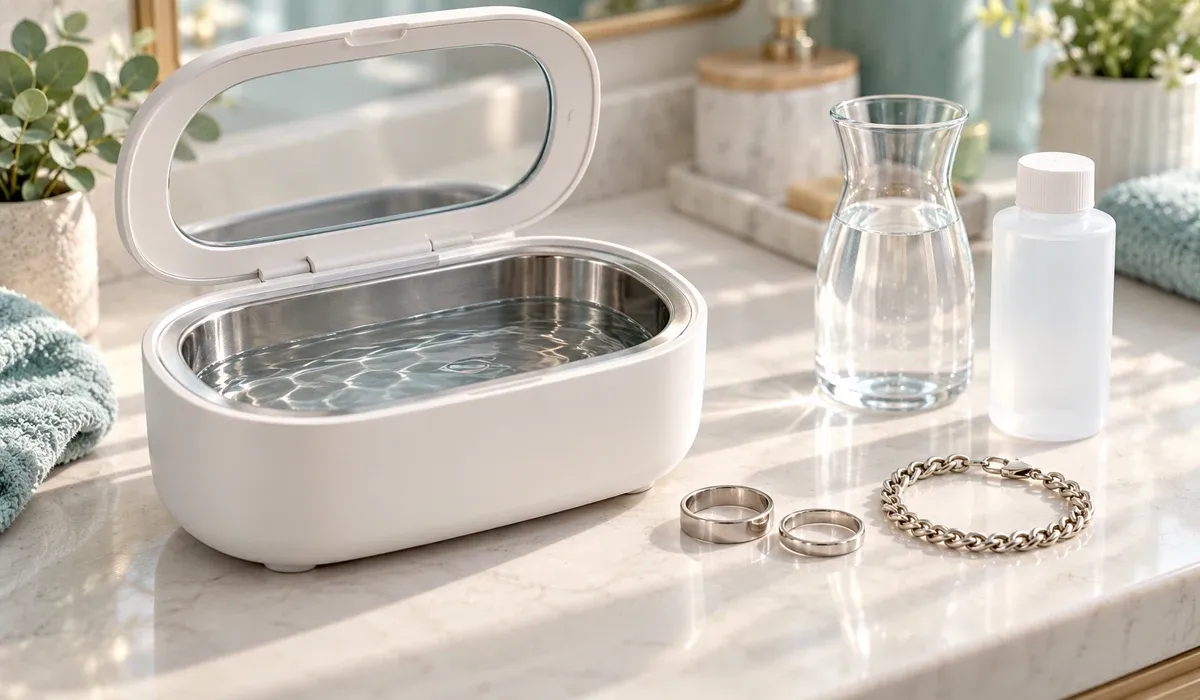
Sonixmax's 140ml rechargeable household ultrasonic cleaner with Type-C charging is one platform brands can evaluate for cordless small-item cleaning concepts. Its rechargeable design, charging interface and tank dimensions should be assessed together against the intended application.
A rechargeable model should be selected because its verified operating routine fits the product concept. A plug-in model should be assessed by the same standard: suitable item fit, demonstrated cleaning results and clear daily operation.
If you are developing a household ultrasonic cleaning product, contact us to discuss your private-label requirements. Share the intended items, use locations, expected cleaning routine, target market and branding needs so an appropriate product configuration can be evaluated.