Oct 24, 2026Ultrasonic Cleaning Technology
Why Is My Household Ultrasonic Cleaner Making Noise?
Learn why household ultrasonic cleaners can buzz, what to check when the sound changes, and how brands should evaluate cleaning results and noise claims separately.
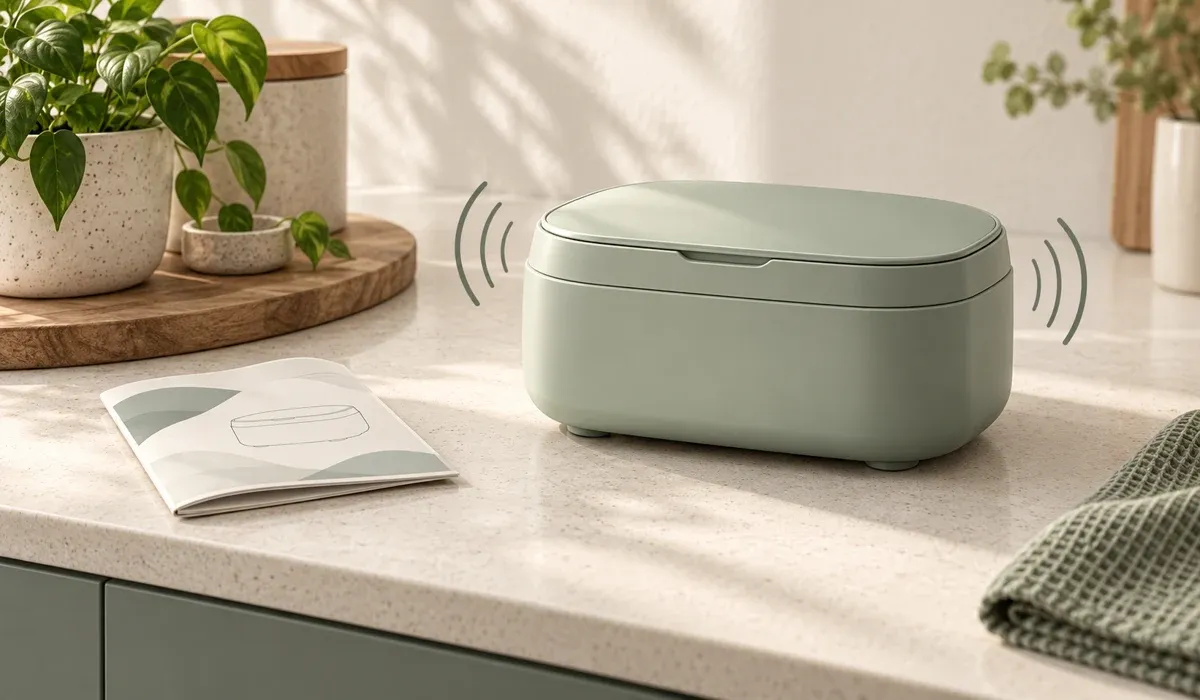
The first cycle starts. The timer counts down, and a buzz comes from the cleaner on your counter.
For someone using an ultrasonic cleaner for the first time, the sound can feel at odds with the name. If the cleaning happens at a frequency beyond normal hearing, why can you hear anything?
“Ultrasonic” does not mean the complete appliance will be silent. Audible buzzing or hissing can accompany operation. But that does not make every sound normal, and it does not tell you how well the machine is cleaning.
The distinction becomes easier to understand through three situations: a first use, a change in a familiar machine, and a comparison between products.
The First Cycle: You Have Nothing to Compare It With
A new owner often reaches for a video: does everyone else's cleaner sound like this?
It is an understandable starting point, but an unreliable comparison. A different model, a different room and a phone held closer to the appliance can produce a very different impression on playback.
Start with the instructions for your own unit. Some household cleaner manuals describe buzzing during a cycle. That is useful context for the model they cover; it is not permission to dismiss an unexpectedly harsh sound from any cleaner.
Why the sound can be audible
The cleaning system transfers vibrational energy through the tank into the liquid. The cleaning process and vibrating assembly can also produce audible sound. What reaches your ears is not simply a direct reading of the ultrasonic operating frequency.
The housing, contents and supporting surface also form part of the operating setup. A cleaner sitting on a counter is a complete appliance, not an isolated ultrasonic wave.
That is why two useful questions need separate answers:
- Is the appliance behaving as its instructions describe?
- Is it achieving the intended cleaning result?
A buzz alone cannot settle either question. A unit may make sound while an unsuitable liquid, poor loading or another process issue limits cleaning. A quieter machine is not automatically less effective.
Our guide to checking whether an ultrasonic cleaner is working addresses the performance question separately. Any test still needs to be appropriate for the exact equipment.
A Week Later: The Sound Is Different
Imagine that the same cleaner now makes a rattle you did not notice before. Perhaps you have moved it, changed the contents or added an accessory.
That history is more useful than deciding whether the sound resembles someone else's recording. It gives you a specific change to investigate, without assuming that a particular internal component has failed.
Stop the cycle before inspecting the load, adjusting the lid or moving the appliance. Follow its shutdown and power-disconnection instructions before handling the unit or liquid.
Look at what changed around the machine
Check the supporting surface and the space around the cleaner. Is it stable? Is another object touching the housing? Does the placement meet the instructions and leave the required ventilation clear?
Resist the temptation to hide the sound under a towel or inside a homemade box. A quieter impression is not worth obstructing ventilation or making the unit unstable. Any additional support or enclosure needs to be suitable for that configuration.
Then look at what changed inside it
Check the permitted liquid level with the intended contents in place. The capacity printed on a product page is not a filling instruction. Deliberately running the unit dry, underfilling it or overfilling it is not a useful way to compare sounds.
Review item placement and the specified accessories. A new load may introduce contact between objects or with the tank. Use the basket or holder required for that model, and rearrange contents only after stopping the cycle.
Finally, check that the lid is in its instructed position. An appropriate lid can reduce audible sound, although the effect depends on the design. Do not press on it, add weights or defeat a closure mechanism to suppress a rattle. If the product includes UV-C, follow its enclosure instructions throughout.
These checks can identify a changed setup. They cannot establish the condition of a transducer, generator or electrical connection from sound alone.
When another trial cycle is the wrong next step
Leakage, smoke, a burning smell or visible damage calls for stopping use and arranging support. Do not restart a potentially faulty unit to make a better recording.
An unexplained sound change, a recurring error or changed cleaning behavior also warrants supplier guidance rather than repeated experimentation.
A useful message describes the model, when the change began, what changed in the setup and any other symptoms. An existing photo or recording may help explain the observation. The Sonixmax contact page provides a route to discuss an equipment question, but a phone video should not be treated as a component diagnosis.
Choosing a Product: What Does “Quiet” Actually Tell You?
The question changes when you are selecting a cleaner for a household brand or retail range. You are evaluating whether its sound fits the experience you want customers to have.
“Quiet” on a supplier page is a starting point for a conversation. Ask what it refers to: an informal impression, a comparison under stated conditions, or a measured result for the configuration you intend to order.
For example, the Sonixmax compact household ultrasonic cleaner with UVC, SNX-HH370, includes household noise considerations in its positioning. Its product page also makes clear that specific noise-level claims need applicable test data for the ordered configuration. It does not establish silent operation or a universal decibel value.
When comparing samples, keep the conditions consistent: the supporting surface, permitted fill level, intended load, selected cycle and lid position. Record those conditions alongside your observations.
A phone recording can help communicate a change or a rattle. Microphone placement, recording processing and playback volume limit its value as a comparison, and it should not become proof of a precise retail noise claim.
Sound and cleaning results should remain separate acceptance points. Choosing the sample that seems quietest makes little sense if it does not meet the intended cleaning requirement.
The broader household ultrasonic cleaner feature guide can help place that assessment alongside controls, item fit and everyday water handling.
Set the Expectation Before the First Use
For a household brand, part of the work belongs in the instructions rather than on the specification sheet. Explain the operating sound customers may encounter, how to set up the exact model and what changes should prompt them to stop and seek help. Base that explanation on the final product and its documented behavior.
A customer should not have to guess whether a familiar buzz means failure—or whether a new rattle can be ignored. Clear expectations give them a better reference than an unrelated online video.
The most useful reference is the same model, used as instructed, with attention to what has changed. Loudness alone is a poor substitute for that context.
If you are evaluating a household cleaner for your brand, contact us to discuss the intended use and sample-evaluation requirements.