Oct 22, 2026Ultrasonic Cleaning Technology
Household Ultrasonic Cleaners: Water Only or Cleaning Solution?
Learn when water alone may suit a household ultrasonic cleaner, when to consider a compatible cleaning solution, and what to check before adding detergent.
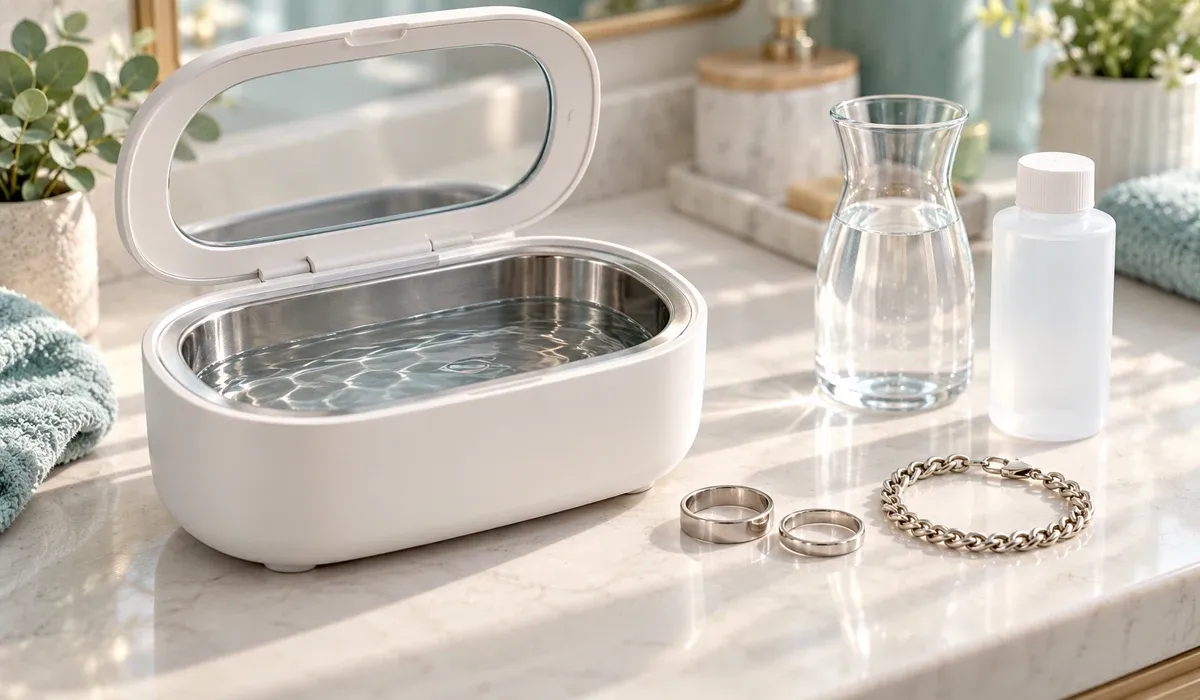
You fill a household ultrasonic cleaner with water, place a small item in the tank and start a cycle. Some dirt comes away, but an oily film remains. Does the machine need a cleaning solution, or should you simply run it longer?
The answer depends on three things: what the machine permits, whether the item is suitable for ultrasonic cleaning, and what you are trying to remove. Adding detergent without checking those conditions can create a different problem instead of solving the original one.
This guide explains how to approach water-only cleaning, when a compatible cleaning solution may help, and what household-product brands should clarify in their user instructions.
Quick Answer: Can You Use an Ultrasonic Cleaner With Just Water?
Some household ultrasonic cleaners permit water-only operation, but water alone is not a universal cleaning method for every machine, item or type of residue. Follow the instructions for the exact cleaner and the item being cleaned.
Where water-only use is permitted, it may be a suitable starting method for light, readily removable contamination. Persistent oily or cosmetic residue may call for a compatible cleaning solution. That does not mean any household detergent is suitable, or that more detergent will produce a better result.
Most importantly, plain water does not make an unsuitable item safe for ultrasonic cleaning.
Check the Item Before Choosing the Liquid
Before deciding what to pour into the tank, establish whether the item should go into an ultrasonic cleaner at all.
Jewelry can contain treated stones, delicate finishes, adhesives or loose settings. Eyewear can have coatings and assembled components with their own care requirements. An item that tolerates a gentle hand wash does not automatically tolerate ultrasonic cleaning.
If the material, treatment or construction is uncertain, check with the item's supplier or an appropriate specialist before proceeding. Choosing plain water does not remove the risks associated with vibration, immersion or existing damage.
For brands developing a jewelry-care product, our jewelry-brand ultrasonic cleaner guide explains how item suitability and customer education fit into the product concept.
What Water Does—and What a Cleaning Solution Adds
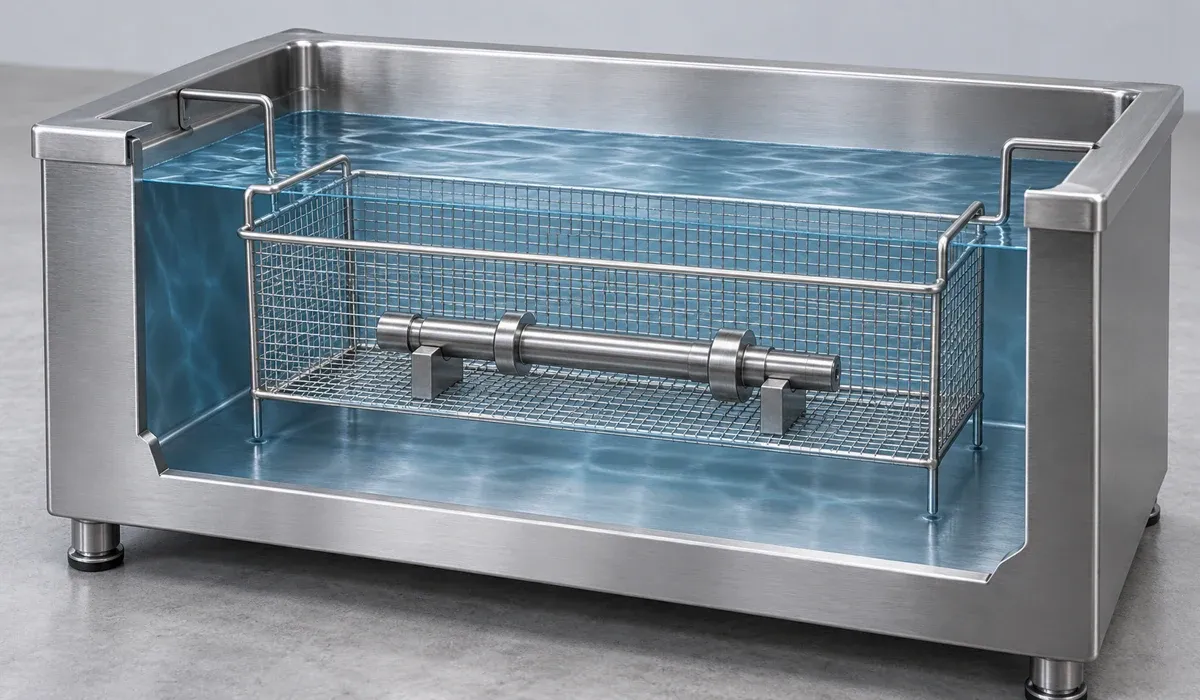
In a water-based ultrasonic bath, the liquid carries the ultrasonic activity to immersed surfaces. Cavitation helps loosen contamination from areas reached by the liquid.
A compatible cleaning agent adds a chemical contribution. Depending on its formulation, it can help wet surfaces and remove the particular residue it is designed to address. The machine, liquid and contamination therefore work together; the liquid is more than a container for the ultrasonic action.
The two contributions can be understood as complementary parts of a permitted cleaning process:
This is a process illustration, not a formula for predicting cleaning performance.
This distinction explains why water-only cleaning can give different results on different items. Loose contamination and an adherent oily film present different cleaning tasks. A longer cycle does not necessarily compensate for unsuitable chemistry, poor liquid access or an item that should not be immersed.
Use the result to identify what needs checking rather than treating every remaining mark as a reason to increase time or detergent strength.
When Should You Consider a Cleaning Solution?
Start with the machine's permitted liquids and the item's care instructions. Then consider the residue.
What you observe | What to check | Practical direction |
|---|---|---|
Light contamination comes away using the permitted water-only method | Whether the result meets the intended cleaning need | There may be no reason to add detergent for that task. |
Oily or cosmetic residue remains | Whether the machine, item and proposed cleaning product are compatible | Evaluate an approved cleaning solution using its specified conditions. |
A film or spots appear after drying | Detergent carryover, water quality and the required rinsing method | Review the whole process before adding more cleaner. |
Discoloration remains after surface dirt is removed | Whether the mark is dirt, tarnish, finish wear or another surface condition | Do not assume a stronger bath will restore the finish. |
Material, coating or construction is unknown | Whether ultrasonic cleaning is appropriate at all | Resolve suitability before choosing a liquid or starting a cycle. |
A product labeled “jewelry cleaner” is not automatically intended for an ultrasonic tank. Confirm its application, dilution and restrictions. A liquid intended for wiping or dipping may have different instructions from one formulated for ultrasonic use.
Compatibility must cover both the item and the machine. Approval for one does not establish approval for the other.
Can You Use Dish Soap in a Household Ultrasonic Cleaner?
Some household-cleaner instructions permit a suitable mild detergent. Other systems specify particular cleaning chemistry. Neither instruction should be transferred to a different machine without checking.
“Add a few drops of dish soap” is therefore not a universal recipe. Detergents differ in formulation, concentration, foaming behavior and residue. A familiar product name or a “gentle” label does not establish compatibility with coatings, stones, plastics or the cleaner itself.
If the exact equipment instructions allow a detergent, also confirm that the item and detergent directions support the proposed use. Follow the specified amount and operating conditions rather than guessing a stronger mixture.
Hand dishwashing liquid, automatic dishwasher detergent and a purpose-made ultrasonic concentrate should not be treated as interchangeable. Do not mix household cleaning chemicals or substitute a solvent into a household bath. If the permitted liquid is unclear, ask the equipment supplier before using an additive.
Tap Water, Purified Water and Rinsing
Follow the cleaner's water requirements rather than assuming that every household machine needs distilled or deionized water.
Water quality can matter when marks remain after drying. However, changing the water source does not resolve every cause: a film may also come from cleaning-product carryover or contamination left on the item.
Likewise, purified water does not establish that an item is suitable for ultrasound or that an added detergent is compatible.
Where rinsing is required, use a method suitable for the item and the cleaning product. A cleaning cycle and a rinse serve different purposes. Empty and care for the tank according to the machine instructions; avoid leaving used liquid inside simply because it still looks clear.
A visibly cleaner surface also does not establish disinfection or sterilization. Those claims require separate evidence for the specific process.
A Simple Check Before Each Cleaning Task
A practical household routine starts before the start button:
- Confirm the item. Check its material, finish, construction and care instructions.
- Check the machine. Identify the permitted liquid, filling level, loading method and cycle requirements.
- Confirm any additive. Use only a compatible product under its specified dilution and temperature conditions.
- Inspect the result. If residue remains, identify the likely cause before increasing time or changing chemistry.
- Finish as required. Rinse, dry and care for the item and tank according to their instructions.
Do not transfer a jewelry-cleaning mixture to retainers, aligners or other oral-care appliances. Those items have their own material and care requirements.
What Household Brands Should Put in Their Instructions
For brands and private-label buyers, “works with water” needs a clear context: which representative items, which contamination and which operating conditions were evaluated?
Before approving packaging or product-page claims, check the final product configuration with representative items and the proposed liquid. Record the filling, loading, cycle and finishing steps used. Make the same guidance available in the manual, product listing and customer-support material.
If a cleaning solution is permitted, explain the approved type and usage conditions. If suitability varies by item, make that limitation easy to find. Avoid presenting every disappointing result as a need for more detergent.
Our household ultrasonic cleaner feature guide discusses how water handling and simple operation fit into the wider product experience.
Sonixmax's household ultrasonic cleaner with selectable cycles and degassing is one platform brands can evaluate. Its feature list does not replace confirmation of the intended items, cleaning liquid and final user instructions.
If you are developing a household cleaning product, contact us to discuss your private-label requirements. Share the intended items, typical residue, target market and proposed use claims so the product and instruction requirements can be evaluated together.