Oct 8, 2026Buying Guides
Household Ultrasonic Cleaner Feature Decisions: What Brands Should Add, Skip, or Customize
Learn which household ultrasonic cleaner features consumer brands should add, skip, or customize, including tank size, UV-C, Degas, Type-C charging, battery design, packaging, and OEM options.
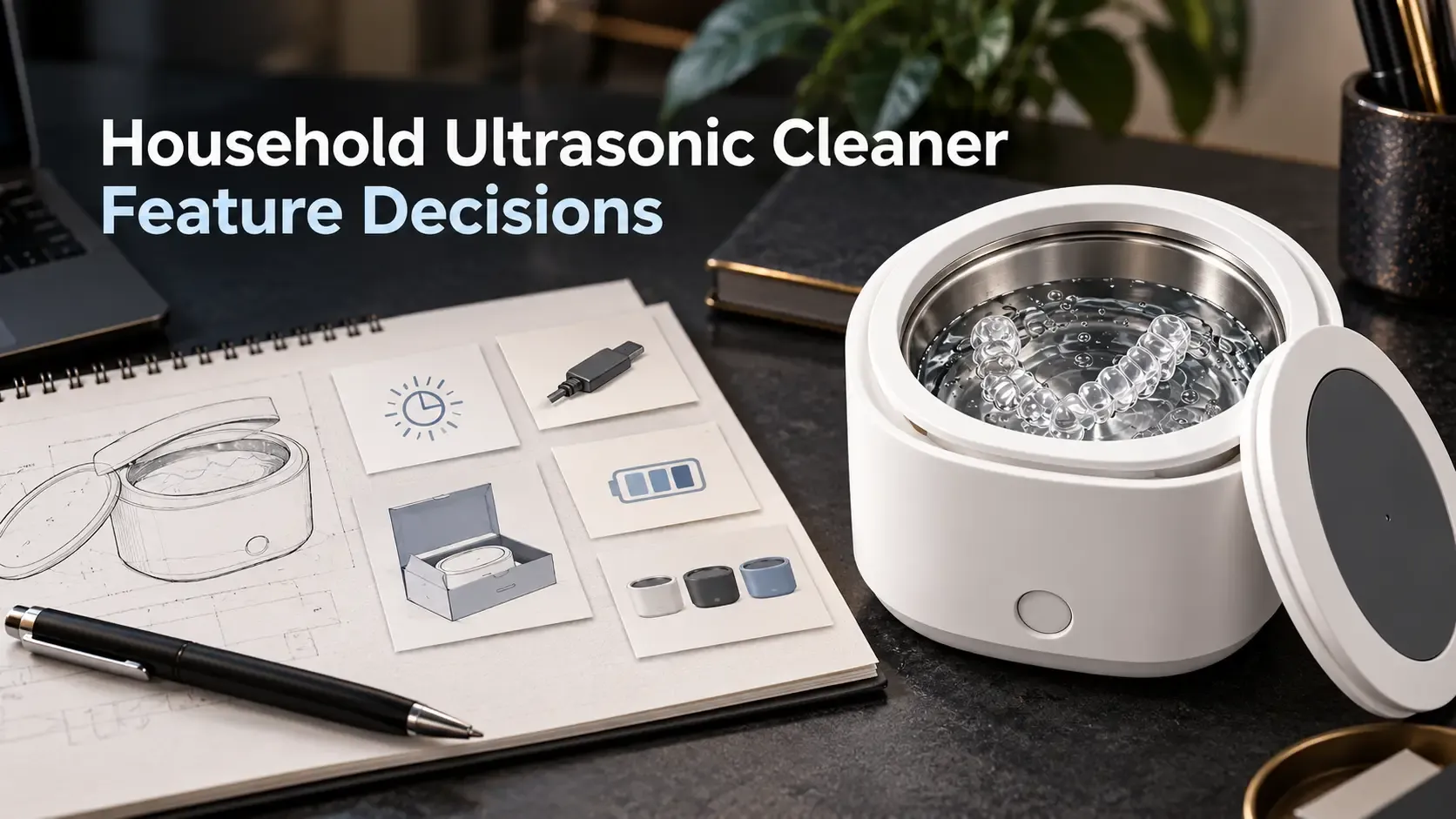
For consumer brands, a household ultrasonic cleaner is not better simply because it has more features.
A long feature list may look attractive in a supplier catalog, but every added function can also increase cost, user confusion, packaging complexity, documentation requirements, and after-sales risk.
The better question is not:
How many features can we add?
The better question is:
Which features actually support our product positioning, customer use case, sales channel, and long-term brand strategy?
This guide helps consumer brands, ecommerce sellers, retailers, and private-label buyers decide which household ultrasonic cleaner features should be added, skipped, or customized.
Quick Answer
A household ultrasonic cleaner should first get the core experience right: usable tank space, simple operation, easy water handling, suitable item fit, and clear product positioning.
After that, brands can decide which features are worth adding.
UV-C may support certain hygiene-positioned products, but it also requires more careful claims, documentation, and market review. Type-C charging or battery-powered designs may make sense for portable or bathroom-side use, but they add cost and development complexity. Degas may support a more technical or premium product position, but it may not be necessary for simple household use if the target customer does not understand it.
The best feature set is not the longest one. It is the one that customers can understand, use regularly, and trust.
Why More Features Do Not Always Make a Better Product
Many household ultrasonic cleaner projects begin with feature questions:
- Can we add UV-C?
- Can we add Type-C charging?
- Can we make it cordless?
- Can we add multiple cleaning modes?
- Can we customize the color?
- Can we add a display screen?
- Can we make the tank larger?
These are valid questions, but they should not be the first step.
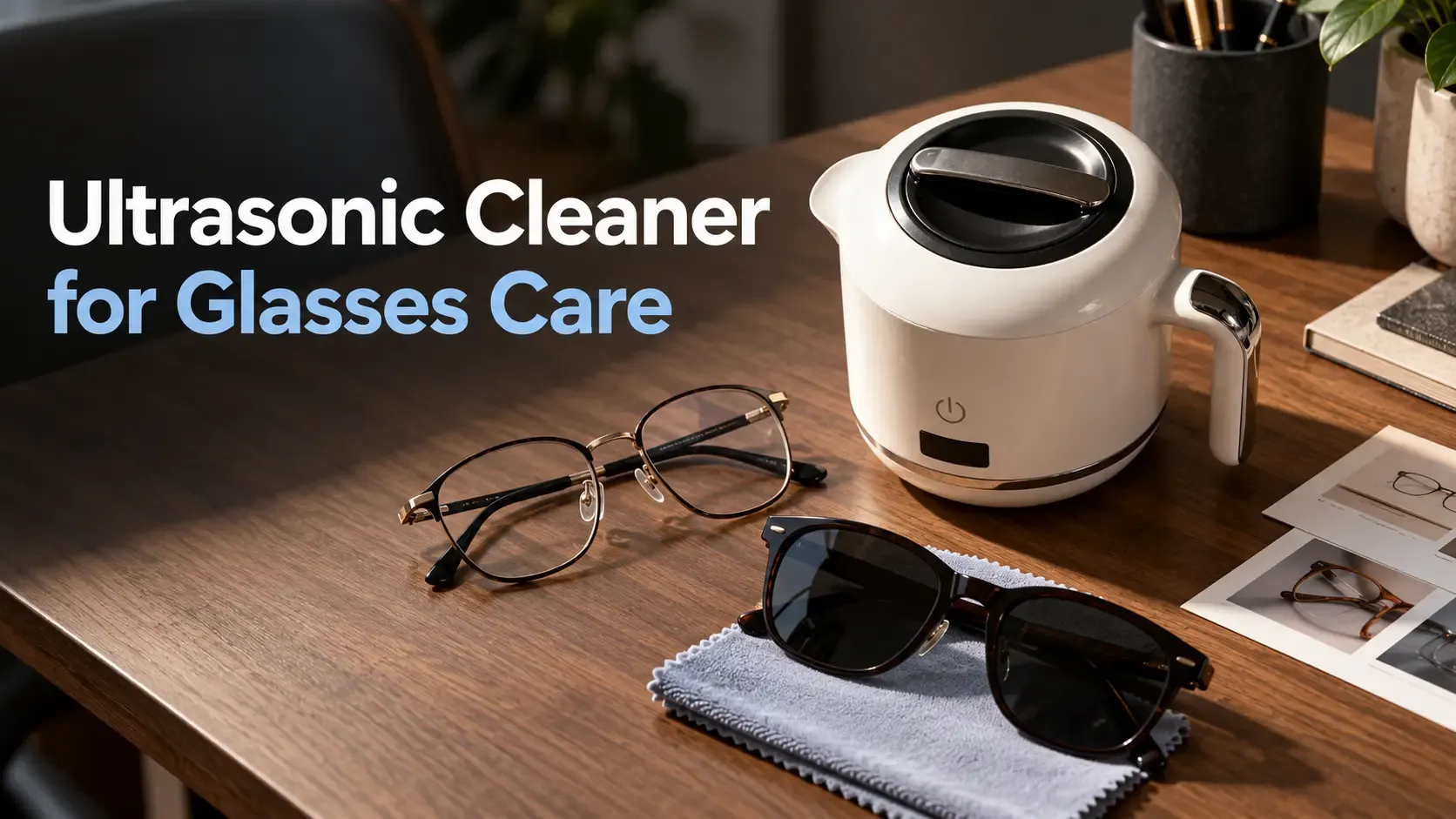
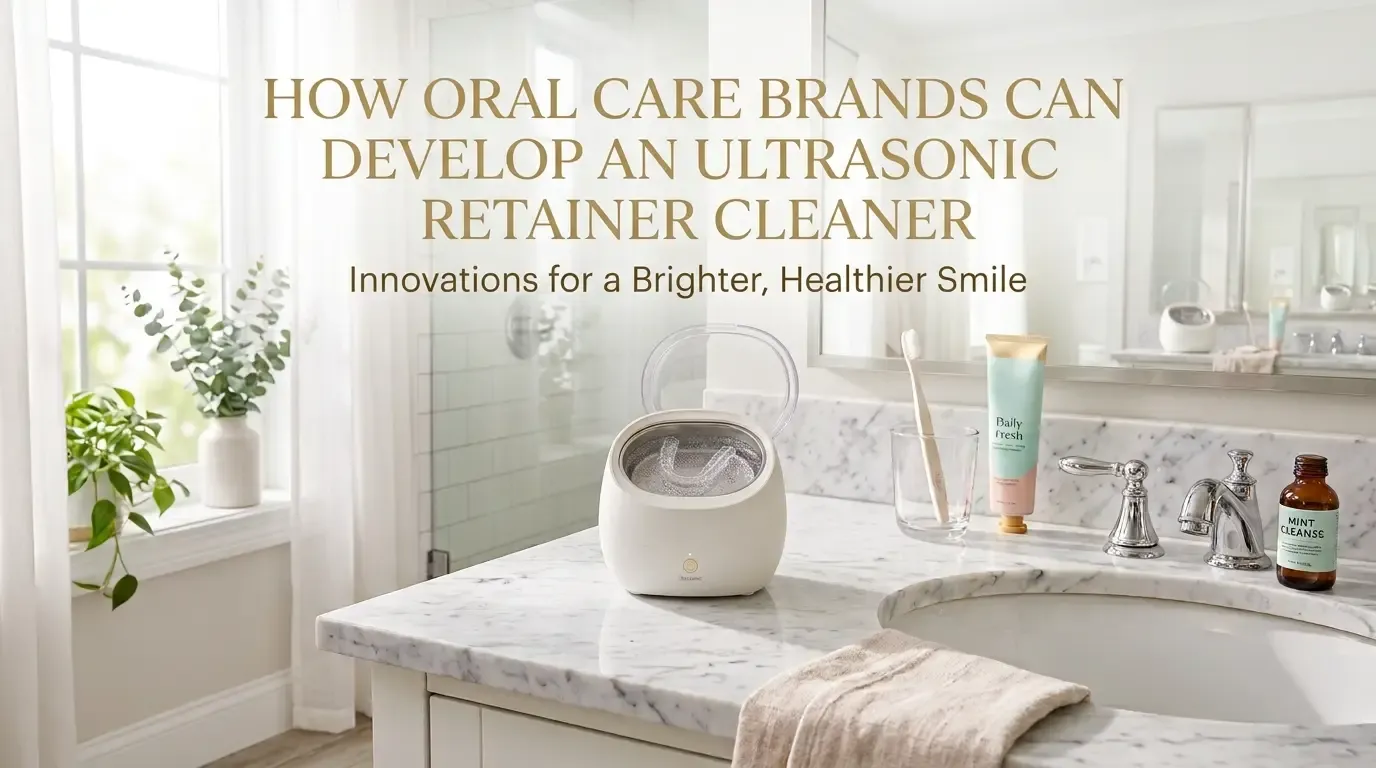
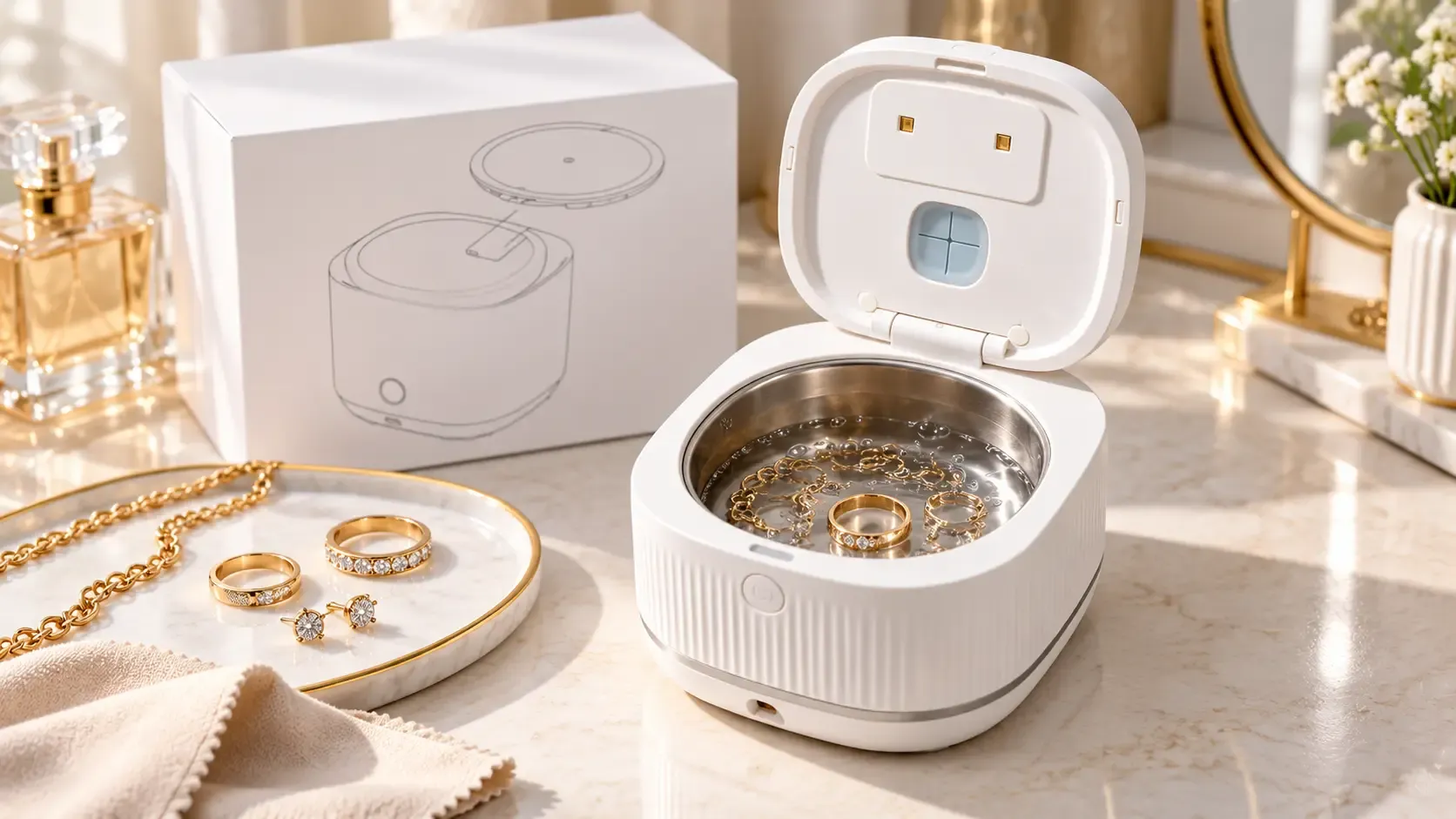
Feature decisions should start from the product use case. A jewelry-care product, eyewear-care product, oral-care product, and general household cleaning product may all use ultrasonic cleaning technology, but they do not need the same configuration.
A feature is valuable only when it improves the user experience, supports the brand position, or solves a real product problem.
If a feature only makes the product harder to understand, harder to produce, or harder to support, it may reduce product clarity instead of increasing product value.
Confirm the Basic Experience Before Adding Advanced Features
Before adding premium functions, brands should first confirm whether the basic product experience works.
The first priority is usable tank space. Stated capacity is not enough. Brands need to confirm whether the target item actually fits naturally inside the tank. Eyewear may require usable internal length, oral-care appliances may require suitable tank shape and depth, and jewelry may need a placement experience that works for small items.
The second priority is simple operation. Household users should not need to study a complicated control panel just to start a cleaning cycle.
The third priority is easy water handling. The product should be easy to fill, pour, wipe, and store. This is especially important for products used near a bathroom sink, vanity table, or kitchen counter.
The fourth priority is clear positioning. The customer should quickly understand what the product is for and how it fits into daily use.
If these basics are weak, premium features will not fix the product experience.
Advanced Features: When Are They Worth Adding?
Advanced features can add product value, but only when they support a clear product strategy.
UV-C may be useful for some hygiene-positioned household or oral-care products. However, it affects structure, safety design, labeling, documentation, and marketing claims. Brands should be cautious with words such as
sterilize, disinfect, kills bacteria, or medical-grade unless the claims are properly supported for the target market.Degas may fit a more technical or premium positioning. It can help a product feel more professional, but many household users may not understand why a separate degas mode is needed.
Type-C charging or battery-powered design can support portable, cordless, or travel-oriented products. This may be relevant for oral-care or compact lifestyle products. However, it also affects charging safety, battery cost, shipping, documentation, and after-sales support.
Multiple cleaning modes can be useful when the difference between modes is easy for users to understand. If the product is designed for simple daily use, too many modes may create confusion.
Advanced features should be added because they support a clear product concept, not because they make the specification list longer.
Risk Features: What Can Increase Cost or After-Sales Burden?
Some features are not only product differentiators. They also bring responsibility.
UV-C is a typical example. If a product includes UV-C, brands need to be careful with hygiene-related wording. Depending on the target market, some claims may require testing, documentation, regulatory review, or platform review.
Battery-powered design is another example. Cordless products may look more convenient, but batteries affect charging safety, shipping requirements, warehousing, product life, and after-sales support.
Water-resistance claims also need caution. If a product claims an IPX rating, the design and testing should support that claim.
Deep structural changes can also increase project risk. A new tank shape, new lid structure, new UV-C layout, new battery system, or new housing design may affect tooling cost, development time, MOQ, and validation.
Brands do not need to avoid all advanced features. They simply need to understand the cost and responsibility behind each one.
Customization Depth: Light OEM or Deeper ODM?
Not all customization has the same difficulty.
Logo, labels, packaging, and user-facing presentation are usually lighter OEM directions. Product color, accessory direction, or appearance adjustments may require more project review and higher MOQ depending on the design.
Deeper changes, such as new structure, capacity, tank shape, lid design, function layout, or tooling, are closer to ODM development and require more careful evaluation.
For a broader OEM and private-label overview, see Private Label Household Ultrasonic Cleaner OEM Guide.
Add, Skip, or Customize: Feature Decision Table
Feature | Add When | Skip When | Be Careful Because |
|---|---|---|---|
Larger tank | The target item needs more usable space | The product must stay compact or giftable | Larger size affects packaging and shipping |
Longer internal tank | Eyewear or longer accessories need fit confirmation | The product is mainly for jewelry or small oral-care items | Stated capacity can be misleading |
UV-C | Hygiene positioning is important and claims can be supported | The brand cannot support careful claims and documentation | It affects structure, labeling, safety, and market review |
Degas | Premium or technical positioning matters | Simple one-button use is more important | Users may not understand the function |
Multiple modes | Different use cases require clear cycles | The target customer wants simple daily use | Interface complexity can increase |
Type-C charging | Portability or modern consumer positioning matters | Plug-in countertop use is enough | Charging safety and cost must be considered |
Battery power | Travel or cordless use is central to the concept | Plug-in use is simpler and more reliable | Battery life, shipping, safety, and after-sales risk increase |
Custom color | Brand consistency is important | The brand is only testing the market | MOQ may be higher than simple logo customization |
Custom packaging | Ecommerce, retail, or gifting matters | Early testing can use simple packaging | Dimensional weight and protection matter |
New structure | Existing platforms cannot support the product concept | A standard platform already fits the need | Tooling, MOQ, development time, and validation increase |
This table does not replace project evaluation, but it helps brands decide which features are worth discussing.
Common Feature Selection Mistakes
The first common mistake is adding a feature only because competitors have it. A feature is valuable only when it supports real user behavior.
The second mistake is judging tank capacity only by volume instead of testing the actual target item. A product may look good on paper but fail to fit the jewelry, glasses, aligners, dentures, or accessories the customer wants to clean.
The third mistake is adding UV-C or hygiene-related wording without considering claim boundaries and supporting documentation.
Brands should also avoid making the interface too complex. If users do not understand how to use a product, they may not use it often.
Another mistake is moving into deep customization before market demand is validated. For an early launch, a standard platform or light OEM solution may be enough.
Finally, packaging should not be treated as an afterthought. Feature choices affect box size, accessory layout, protection design, and fulfillment cost.
What Information to Prepare Before Requesting a Feature Quote
Before asking for a household ultrasonic cleaner quotation, brands should prepare the basic product direction.
Information | Why It Matters |
|---|---|
Target application | Helps define whether the product is for jewelry, eyewear, oral care, or general household use |
Target item size | Confirms usable tank size and item fit |
Sales channel | Affects packaging, labeling, logistics, and product presentation |
Expected features | Helps evaluate UV-C, Degas, Type-C, battery, display, or cycle settings |
Brand requirements | Determines logo, color, packaging, and accessory direction |
Target market | Affects plug type, labeling, documentation, and packaging requirements |
Estimated order quantity | Helps decide whether standard, OEM, or ODM is realistic |
Reference products | Clarifies appearance, size, function, and market position |
A clear use case is usually more useful than asking for every possible feature.
What Sonixmax Can Help Evaluate
Sonixmax can help consumer brands, ecommerce sellers, retailers, importers, and private-label buyers evaluate household ultrasonic cleaner feature directions based on application and market positioning.
Depending on the project, Sonixmax can help evaluate.
The goal is not to build the longest feature list. The goal is to select a feature combination that fits the customer routine, sales channel, and brand strategy.
Need Help Choosing Household Ultrasonic Cleaner Features?
If you are developing a household ultrasonic cleaner for jewelry, eyewear, oral care, retail, or ecommerce channels, send Sonixmax your project requirements.
Please include your target application, target item size, expected feature direction, brand requirements, sales channel, estimated order quantity, target market, and reference products.
Sonixmax can help evaluate practical feature directions and whether your project is more suitable for a standard platform, OEM customization, or ODM development.