Oct 8, 2026Buying Guides
How to Choose a Household Ultrasonic Cleaner for Jewelry, Eyewear, and Oral Care Brands
Learn how jewelry, eyewear, oral-care, lifestyle, retail, and ecommerce brands can choose household ultrasonic cleaner products by use case, tank size, design, packaging, accessories, and OEM/ODM need
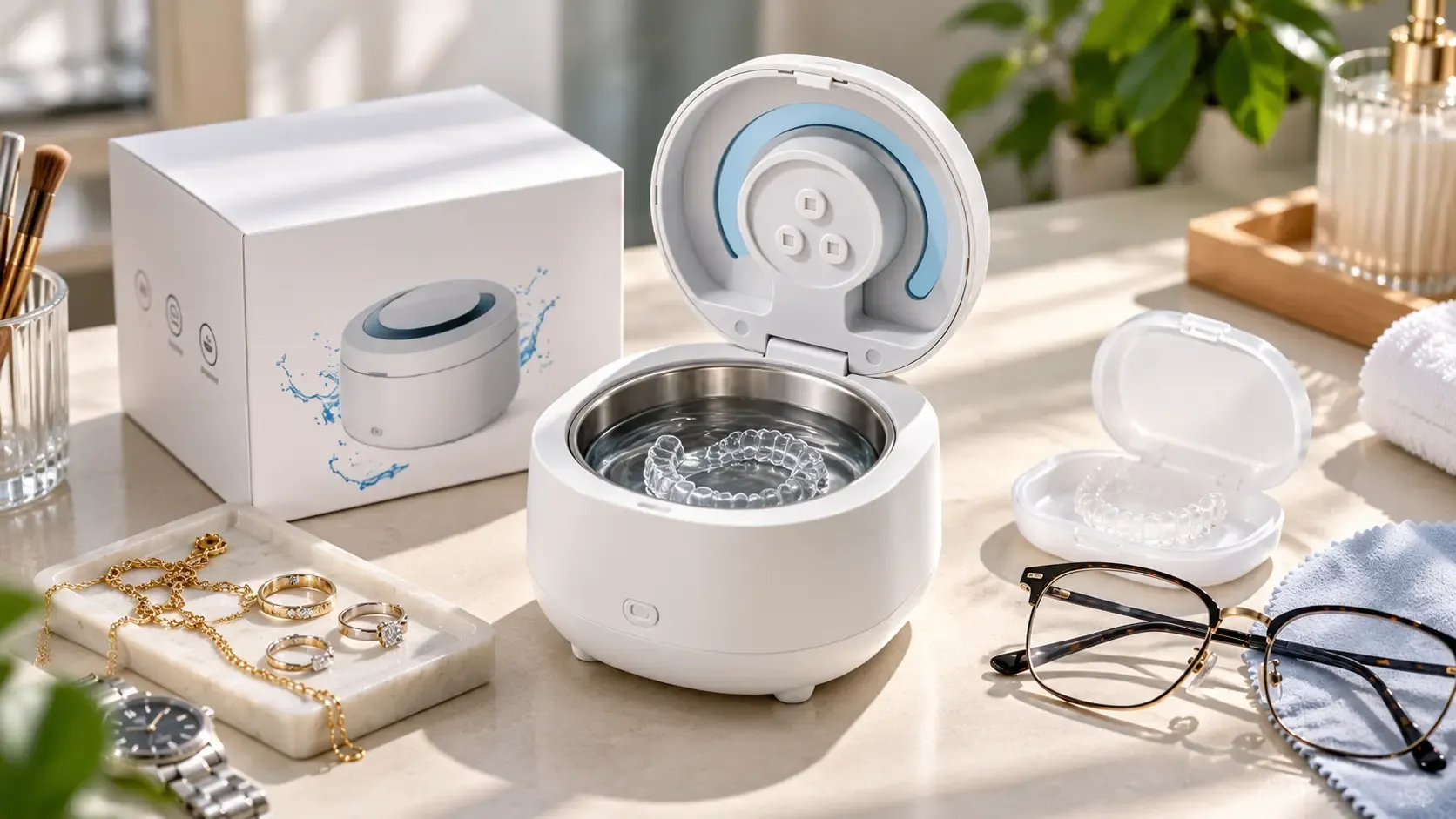
For consumer brands, a household ultrasonic cleaner is not just a small cleaning machine. It is a product that must fit a specific customer routine, sales channel, and brand position.
Choosing the wrong model can create more than a poor cleaning experience. If sunglasses do not fit inside the tank, customers may return the product. If a cleaner looks too industrial for a premium jewelry brand, it may weaken the perceived value of the product line. If packaging is bulky or poorly designed, ecommerce dimensional weight and fulfillment costs may reduce your profit margin.
The right product is therefore not always the one with the largest tank or the longest function list. It is the model that matches the brand’s application, customer expectation, price position, and sales channel.
This guide explains how jewelry, eyewear, oral-care, lifestyle, and retail brands can choose a suitable household ultrasonic cleaner before starting private-label, OEM, or ODM development.
Quick Answer: Match the Scenario, Not Just the Specs
A household ultrasonic cleaner should be selected according to the end-user scenario:
- Jewelry Brands: Focus on compact designs, gentle cleaning, soft-touch aesthetics, fine-mesh baskets so small items do not fall into the tank, and premium giftable packaging.
- Eyewear Brands: Prioritize usable internal tank length over nominal volume. Check tank shape, frame fit, lid clearance, and daily-use convenience.
- Oral-Care Brands: Focus on hygiene positioning, simple operation, easy water handling, splash-resistance expectations, and suitable design for clear aligners, retainers, dentures, or mouth guards.
- Ecommerce & Retail Brands: Make sure the product use case can be understood quickly and the packaging is suitable for shipping, unboxing, and retail presentation.
Start with the Brand Use Case, Not the Machine
Many brands start the sourcing process by asking for a capacity, a photo, or a standard catalog model. A better starting point is defining the customer use case.
Ask:
- What exactly is the customer expected to clean?
- Where will the product be used, such as a bathroom sink, vanity desk, or cabinet?
- How often will the customer use it?
- Should the product feel functional, premium, medical, lifestyle, or giftable?
- Will the product be sold online, in physical retail stores, or as an accessory bundled with another product?
A jewelry-care product, an eyewear accessory, and an oral-care cleaner all share similar ultrasonic principles, but their physical design, user instructions, and buyer expectations are different.
The Secret Sauce for Vertical Brands
Jewelry Care Brands: Aesthetics and Protection
For jewelry brands, ultrasonic cleaners are often positioned as premium aftercare products. Because the cleaner will likely sit on a dressing table or vanity, appearance matters.
The machine should not look industrial. It should feel like a consumer lifestyle product.
Basket design is important. Small earrings, thin chains, or delicate rings may require a fine-mesh basket or a suitable accessory tray so items do not fall to the tank bottom or contact hard surfaces directly.
Not every gemstone, coating, adhesive, or delicate jewelry structure is suitable for ultrasonic cleaning. User instructions should clearly explain what the product is intended to clean and what should be avoided.
Eyewear Brands: Beware of the Shape Trap
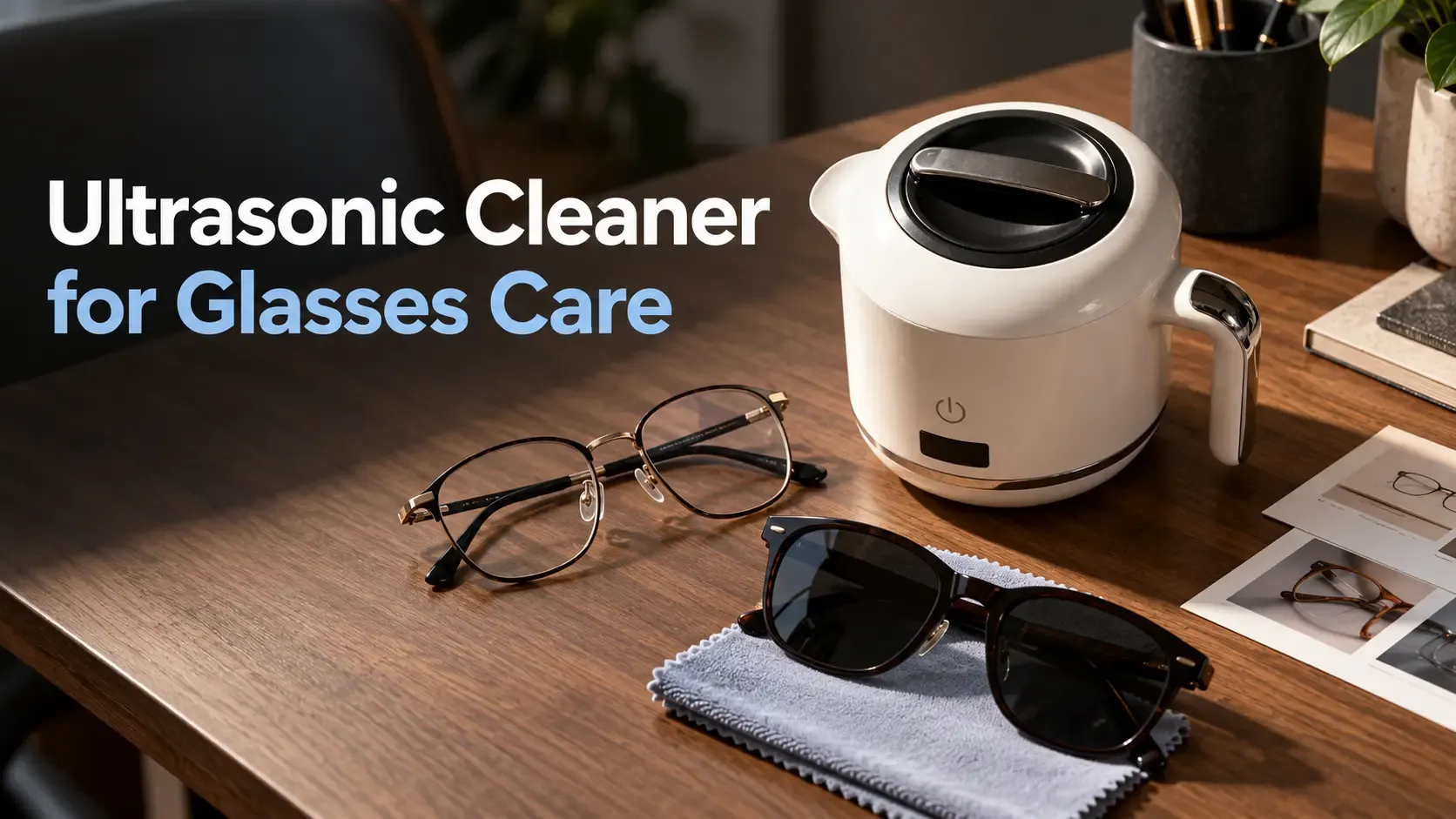
For eyewear brands, the most important specification is often not total tank volume. It is usable internal length.
Two cleaners may both be described as 400ml. However, a round or short tank may not fit common glasses frames, while a longer oval or rectangular tank may work much better. Thick frames, wide sunglasses, or curved temples require practical internal space.
Always test representative frames inside the physical tank before committing to a model.
Oral Care Brands: Hygiene and Sink-Side Safety
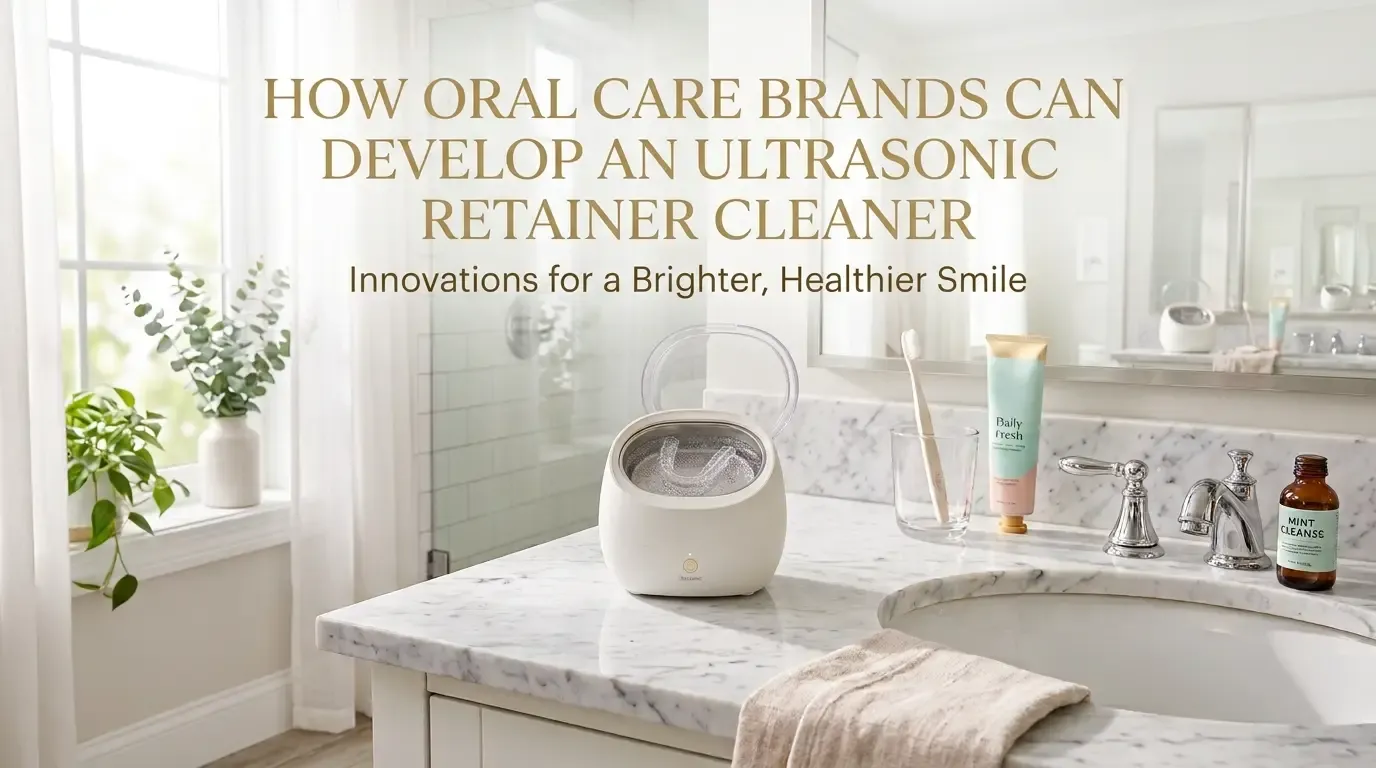
Oral-care cleaners are used for retainers, clear aligners, dentures, mouth guards, and similar personal-care items. Customers care about hygiene, odor, water handling, and ease of use.
Because these cleaners are often used near bathroom sinks, water handling and splash resistance should be reviewed carefully. Depending on your market positioning, you may also consider functions such as UV-C, but these features should be evaluated together with safety, documentation, user instructions, and local market requirements.
Lifestyle and Ecommerce Brands: Simplicity Wins
Lifestyle brands and ecommerce sellers often prefer a multi-purpose household ultrasonic cleaner marketed for jewelry, eyeglasses, watch bands, and small personal accessories.
The advantage is broad appeal. The challenge is that customers must immediately understand what the product is for.
For ecommerce channels, product photos, listing copy, packaging, and unboxing experience become part of the selling system.
A multi-purpose product should have simple positioning, easy operation, clear lifestyle images, and packaging that explains use cases without overpromising.
When to Choose Standard, OEM, or ODM
Not every brand needs a fully customized product from day one. Choose your development route based on your business strategy.
- Standard Platform: Suitable when a brand wants to test market response quickly. It supports faster launch, lower development complexity, and lower initial risk.
- OEM Customization: Useful when the brand needs stronger visual consistency, such as logo printing, custom packaging, machine color, accessories, or selected functional adjustments.
- ODM Development: More suitable when a brand needs deeper product differentiation, exclusive design, structural changes, or a long-term product concept that cannot be achieved with an existing platform. This route requires more careful evaluation of tooling cost, development time, MOQ, validation, and market demand.
In simple terms, OEM is usually branding and light customization based on an existing product platform. ODM means the product itself may change more deeply.
Common Mistakes Brands Should Avoid
- Selecting strictly by appearance: A good-looking product can still fail if its internal dimensions do not fit the target items, such as wide sunglasses or oral-care accessories.
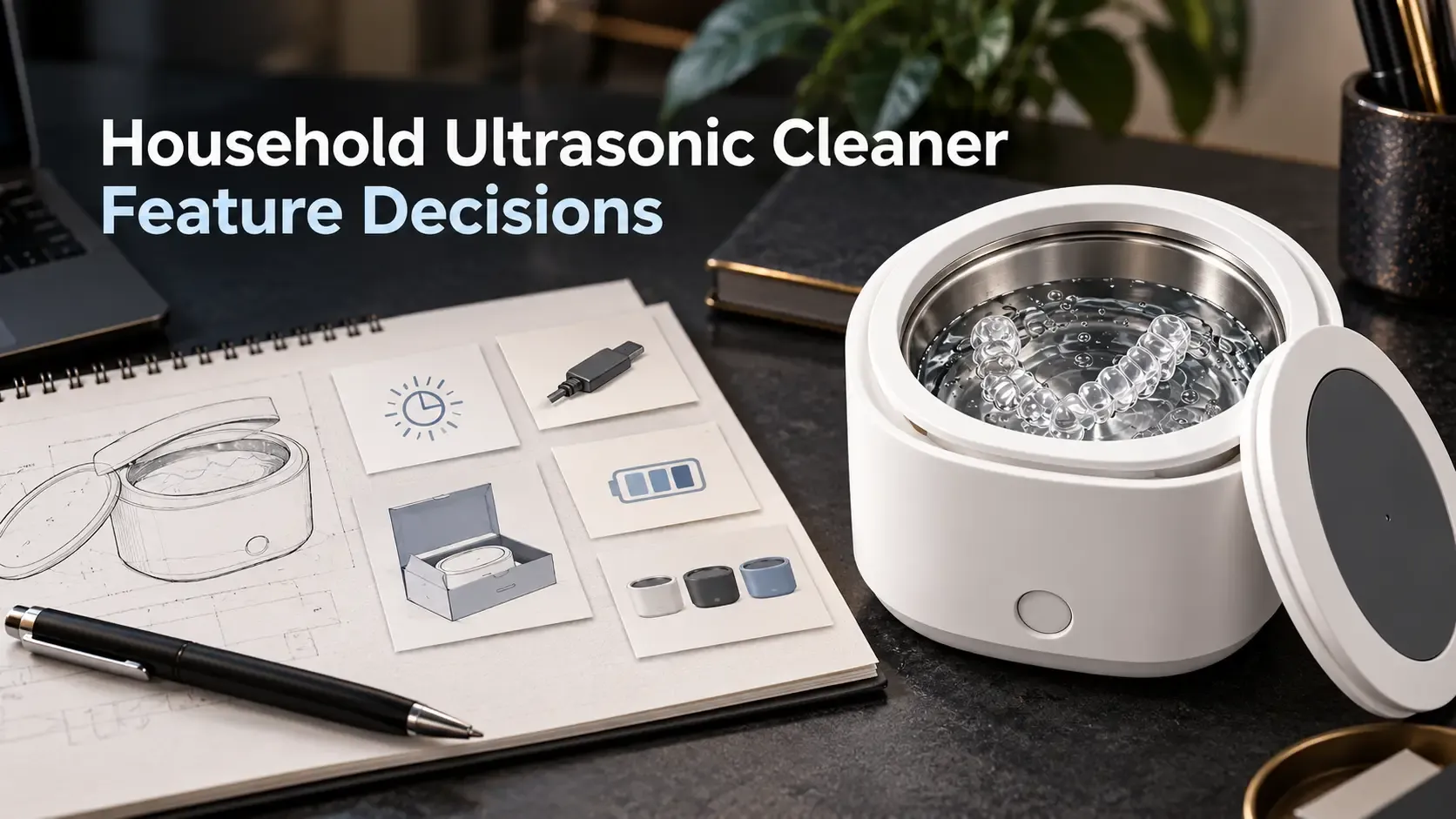
- Adding unnecessary features: More modes, lights, or buttons do not automatically make a product better. They may confuse household users if they do not support the core use case.
- Ignoring documentation and compliance: Household ultrasonic cleaners are consumer electrical products. Discuss destination-market documentation early, including applicable electrical, labeling, packaging, and material-related requirements. Missing or mismatched documentation can create customs, marketplace, or retail-channel problems.
- Forgetting dimensional weight: Do not design packaging only for appearance. Oversized packaging can increase shipping cost, warehouse storage, and fulfillment fees. Packaging should balance visual appeal, protection, and logistics efficiency.
What Information to Send Before Requesting a Quote
Before requesting a quote, prepare the basic product direction. A clear target use case is more useful than a long list of technical specifications.
Information | Why It Matters |
|---|---|
Target application | Defines whether the product is for jewelry, eyewear, oral care, or multi-use |
Sales channel | Affects packaging durability, barcodes, labeling, and retail presentation |
Target item size | Helps confirm whether the intended items actually fit inside the tank |
Branding needs | Determines logo printing, custom colors, packaging, and accessory requirements |
Destination market | Affects plug type, voltage, labeling, documentation, and packaging requirements |
Expected volume | Helps evaluate whether a standard, OEM, or ODM route is suitable |
Need Help Sourcing for Your Brand?
If you are developing a household ultrasonic cleaner for jewelry care, eyewear, oral care, retail, or ecommerce channels, send Sonixmax your project requirements.
Include your target application, customer group, sales channel, preferred product size, branding needs, expected order quantity, and destination market.
Sonixmax can help evaluate your needs and recommend a practical product-development route, whether that is a standard platform, OEM customization, or ODM development.