Aug 17, 2026Ultrasonic Cleaning Technology
What Frequency is Best for Cleaning Engine Parts? (28kHz vs 40kHz Guide)
What frequency is best for cleaning engine parts? Learn why 28kHz is the golden standard for heavy carbon, and when to use 40kHz for delicate aluminum parts.
If you are investing in an industrial ultrasonic cleaner for your automotive shop, you will quickly run into a critical technical question: What frequency should I choose?
Choosing the wrong frequency is a costly mistake. If the frequency is too high, the machine won't have the power to remove baked-on carbon from a heavy engine block. If it's too low for delicate components, it might cause surface pitting and ruin expensive precision parts.
In this technical guide, we will break down the science of ultrasonic frequencies and help you choose the exact specifications for your engine rebuilding needs.
The Science: How Frequency Affects Cleaning Power
To understand which frequency is best, you first need to understand how ultrasonic cleaning works. The transducers at the bottom of the tank create sound waves that produce microscopic bubbles in the liquid—a process called cavitation.
Here is the golden rule of ultrasonic cleaning:
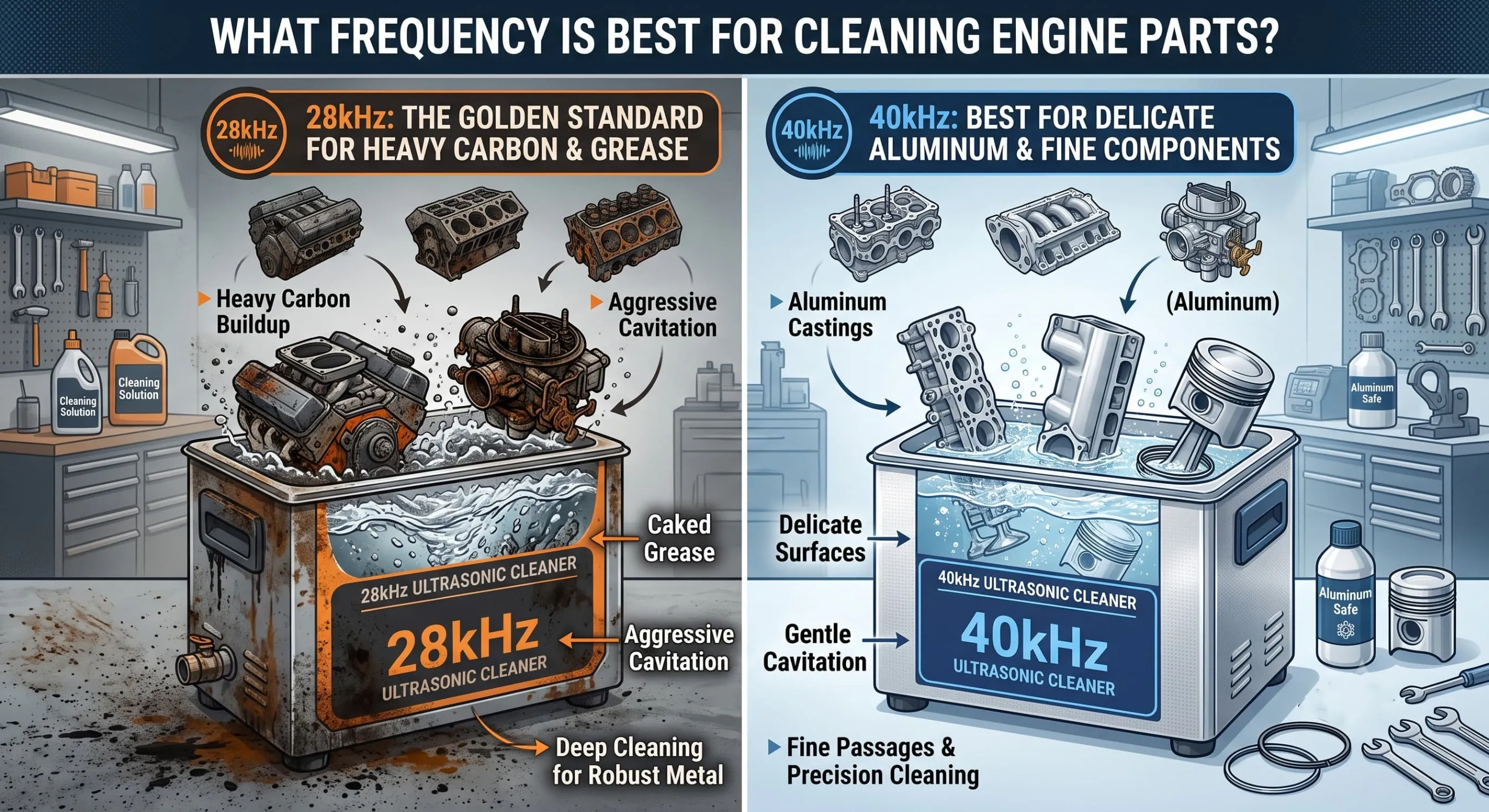
- Lower Frequency (e.g., 28kHz): Creates larger bubbles. When these large bubbles implode, they release massive amounts of energy. This provides an aggressive, heavy-duty "punch" ideal for tough grime.
- Higher Frequency (e.g., 40kHz or higher): Creates smaller, more densely packed bubbles. These provide a gentler, highly detailed cleaning action that can penetrate microscopic crevices without damaging the surface.
28kHz for Heavy Engine BlocksFor many heavy automotive applications, 28kHz is often suitable.
When to use 28kHz:
- Cast iron engine blocks (V8s, diesel engines)
- Heavy baked-on carbon deposits
- Thick, hardened grease and oil
- Rusty transmission cases and exhaust manifolds
Why it works: The large cavitation bubbles generated by 28kHz transducers have the sheer mechanical force required to blast away stubborn carbon that has been baked onto metal at extreme engine temperatures. A 40kHz machine simply lacks the aggressive impact needed for this level of heavy-duty cleaning.
40kHz: When Should You Use Higher Frequencies?
While 28kHz is the workhorse for heavy blocks, 40kHz has its specific place in an engine rebuild shop, particularly when dealing with softer metals and high-precision components.
When to use 40kHz:
- Delicate aluminum cylinder heads (to prevent surface pitting)
- Precision fuel injectors and carburetor jets
- Sensors and electronic components
- Final polishing or rinsing stages
Why it works: The smaller bubbles of a 40kHz frequency can easily penetrate the tiny, complex internal channels of a fuel injector without causing physical damage to the delicate spray nozzles.
The Ultimate Solution: Dual-Frequency Ultrasonic Cleaners
What if your shop cleans heavy cast iron blocks on Monday, and delicate aluminum carburetors on Tuesday? Buying two separate machines is expensive and takes up valuable floor space.
The solution is a Dual-Frequency Industrial Ultrasonic Cleaner (28kHz / 40kHz).
These advanced machines allow operators to switch between frequencies with the push of a button:
- Step 1: Run the 28kHz mode for 15 minutes to blast away the heavy carbon and grease.
- Step 2: Switch to the 40kHz mode for 5 minutes to gently clean out the microscopic blind holes and achieve a perfect, pristine finish.
Don't Forget: Heat and Chemistry Matter Too
While frequency is the engine of your cleaning machine, it needs the right fuel. Even the best 28kHz machine will struggle if you use cold water.
Always ensure your machine has a built-in heater (set to 60°C - 70°C) and use the correct alkaline degreasing solution for your specific metal type. (Read our full guide on How to Choose an Industrial Ultrasonic Cleaner for Engine Parts for more details on chemistry and tank sizing).
Upgrade Your Shop with SonixMax
At Sonixmax, we specialize in manufacturing heavy-duty ultrasonic cleaning systems for the automotive and industrial sectors.
Whether you need a rugged 28kHz single-frequency tank for heavy diesel blocks or a highly versatile 28kHz/40kHz dual-frequency system for mixed automotive parts, we can custom-build the perfect machine for your workshop. Our equipment features true industrial-grade transducers and 2mm thick SUS304/316L stainless steel for decades of reliability.
Ready to blast away carbon in minutes instead of hours?
Contact our engineering team today to discuss your specific cleaning challenges and get a customized quote!